Zillow is one of the most important public sources for real estate research. Teams use Zillow data to study property prices, rental trends, listing changes, neighborhood patterns, home attributes, and market opportunities.
But Zillow API access is not always the easiest path. Zillow’s API terms describe the Zillow API as a service for preapproved licensees, which means many teams need another way to collect public real estate data for research, analysis, or internal workflows.
This guide compares practical Zillow API alternatives, with a focus on web scraping products: CoreClaw, ScrapingBee, Apify, ScraperAPI, Bright Data, and Outscraper.
What Data Can Zillow API Alternatives Collect?
A good Zillow data collection tool should return structured data, not raw page content. Common fields include:
Data Type | Example Fields | Use Case |
Property details | Address, beds, baths, square footage, property type | Property comparison |
Price data | Listing price, Zestimate, rent estimate, price history | Market analysis |
Location data | City, state, ZIP code, coordinates | Local market research |
Listing data | URL, status, photos, description | Listing monitoring |
Historical data | Tax history, price history, valuation changes | Investment research |
Best Zillow API Alternatives
1. CoreClaw
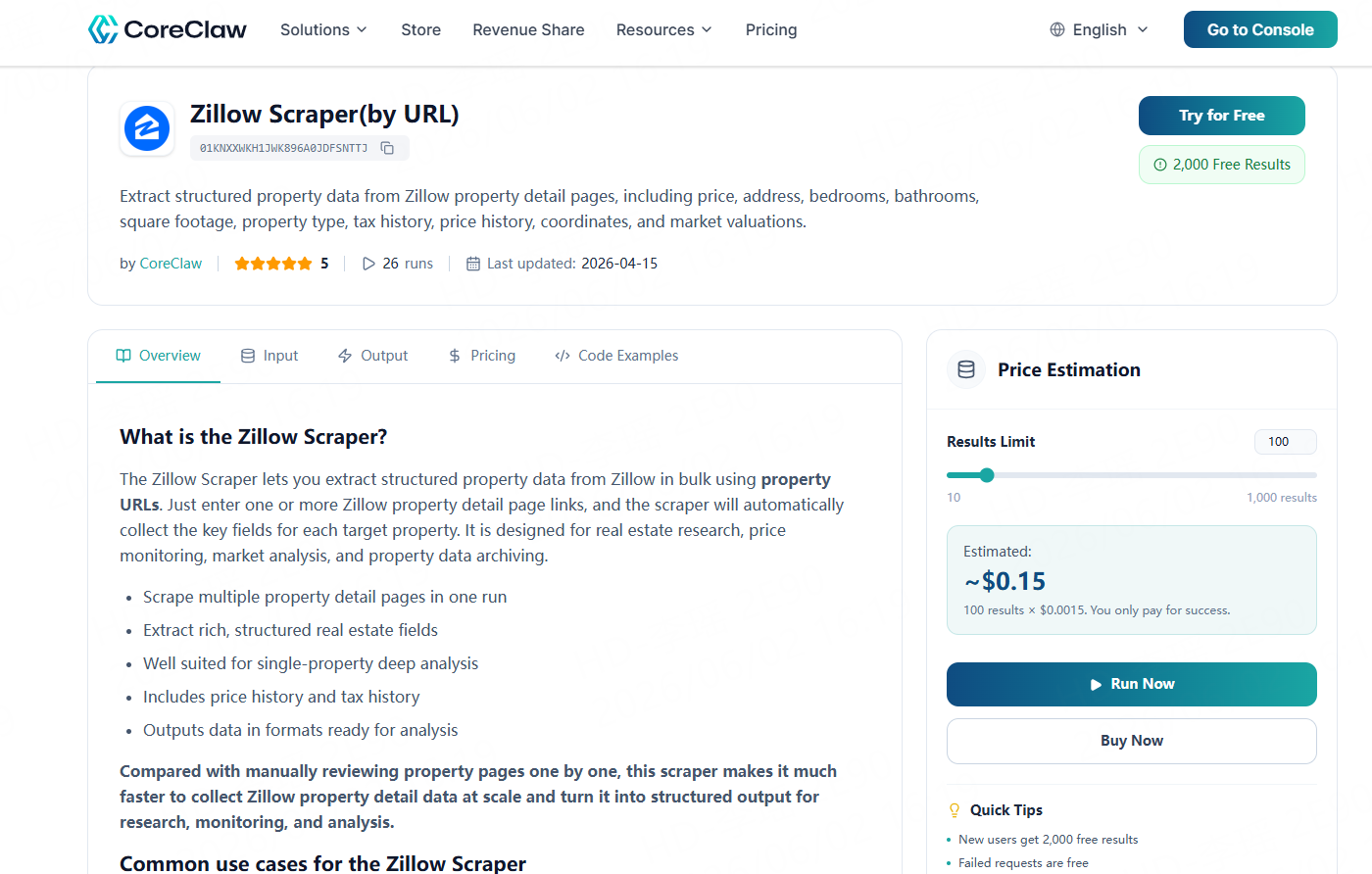
CoreClaw is the most practical option for teams that want Zillow data without building scraping infrastructure. Its Zillow Scraper extracts structured property data from Zillow property detail pages, including price, address, bedrooms, bathrooms, square footage, property type, tax history, price history, coordinates, and market valuations.
CoreClaw fits users who want a simple process: enter Zillow property URLs, run a ready-made Worker, clean and filter the results, then export the data as CSV, Excel, JSON, or through API workflows. This makes it useful for real estate investors, market researchers, analysts, PropTech teams, and non-technical business users.
Best for: no-code Zillow data collection, structured exports, real estate research, property monitoring, and teams that want usable data instead of scraping infrastructure.
Main advantage: CoreClaw combines ready-made Workers, no-code usage, cleaned and filtered structured outputs, API access, CSV/JSON/Excel export, and pay only for successful results.
Limitation: CoreClaw works best when a ready-made Worker matches the target workflow. For unusual real estate sources or custom fields, teams may need to request a custom Worker.
2. ScrapingBee
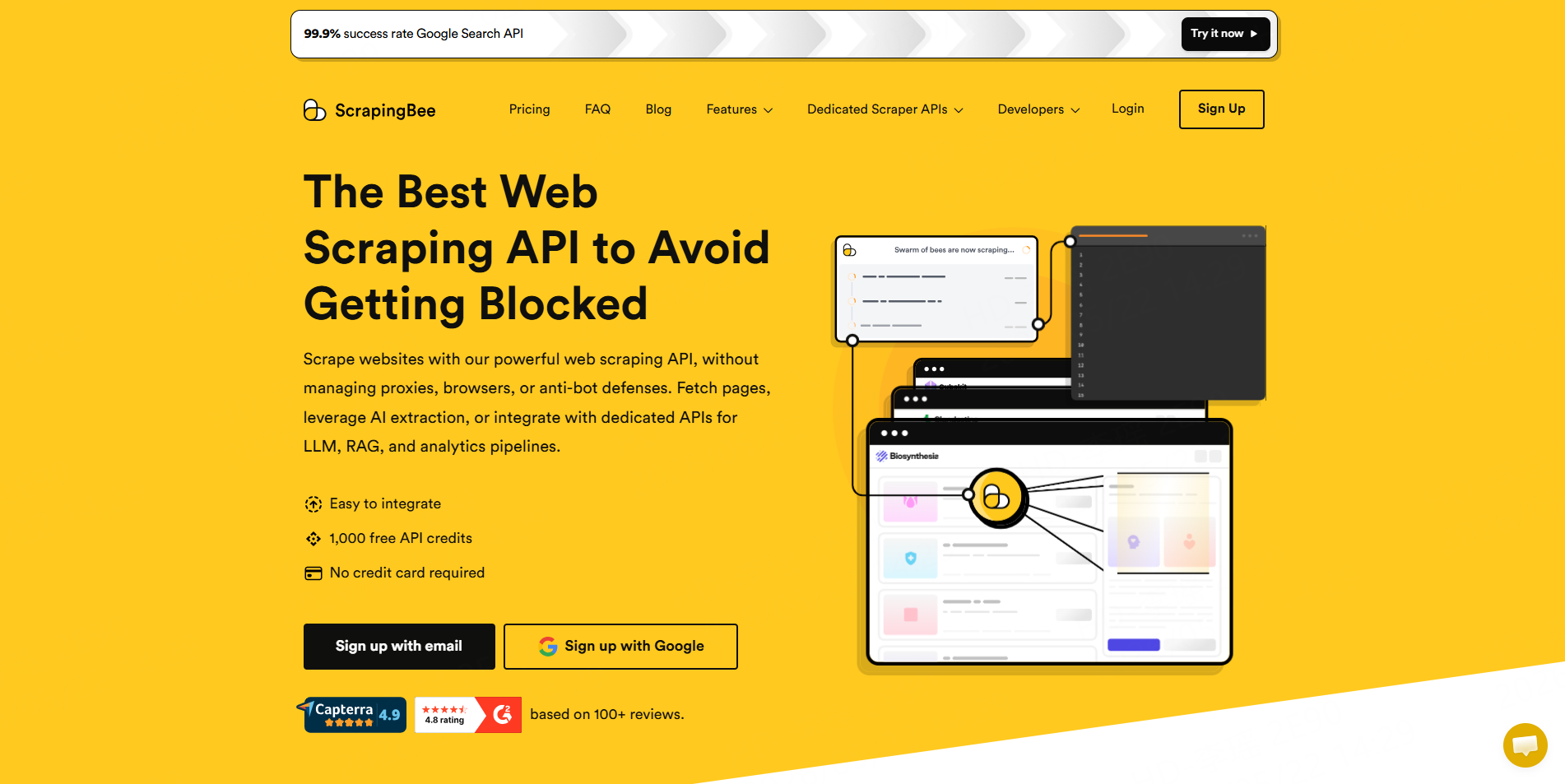
ScrapingBee is a developer-focused web scraping API. It handles proxies and headless browsers so developers can focus on extracting the data they need. Its Zillow-focused page positions ScrapingBee as a way to collect Zillow data through API-based scraping workflows.
Best for: developers building custom Zillow scraping scripts or internal data pipelines.
Main advantage: Simple API model with browser rendering and proxy handling.
Limitation: ScrapingBee is not mainly a no-code Zillow data product. Teams still need developers to parse, clean, structure, and store the data.
3. Apify
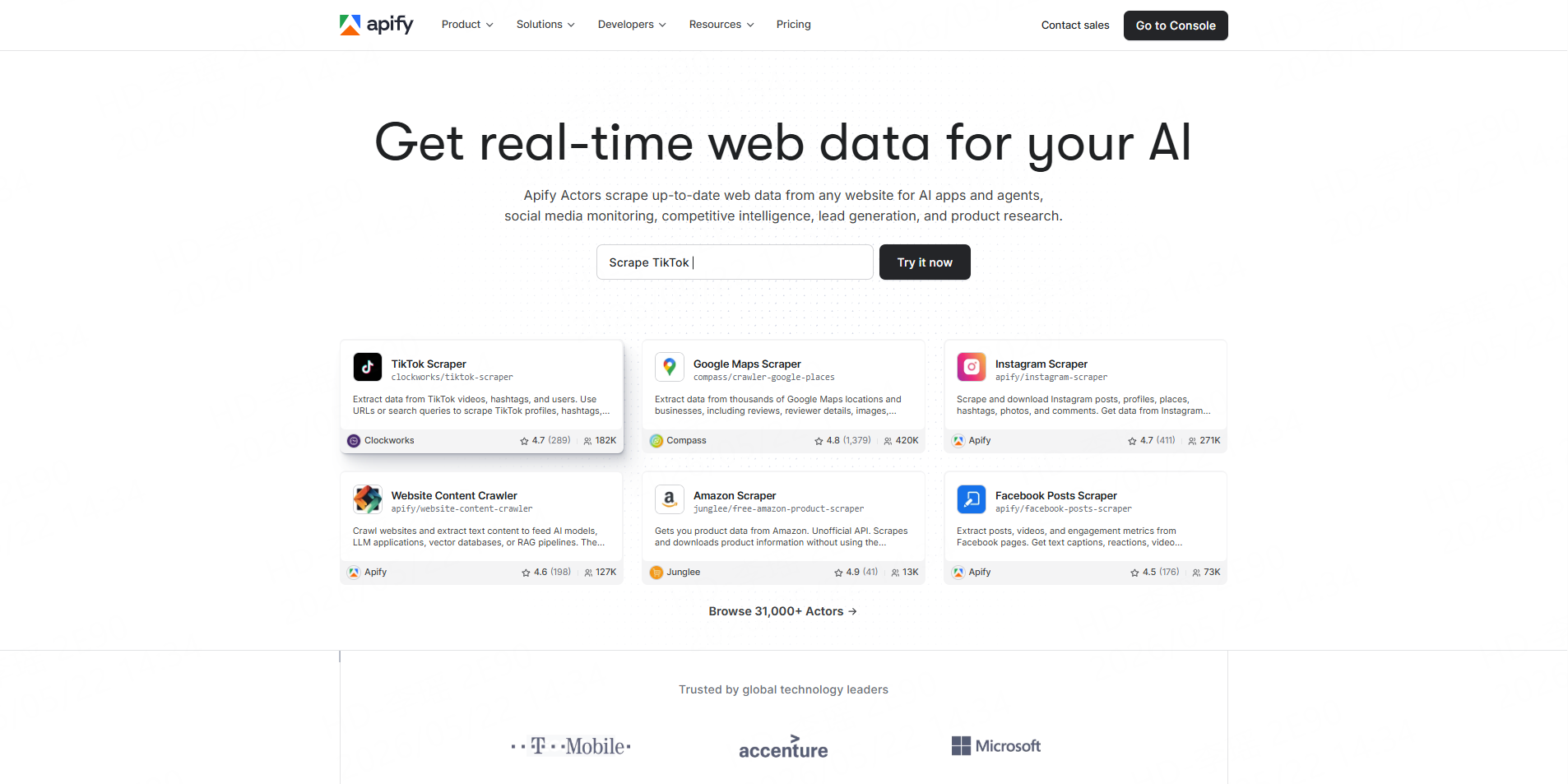
Apify is a cloud scraping and automation platform with many ready-made tools called Actors. Its Zillow Real Estate Scraper can extract Zillow listing data such as price, address, home type, photos, Zestimate, ZPID, and other available fields. It also supports downloading results in formats such as JSON, XML, CSV, Excel, or HTML.
Best for: technical users, growth teams, and data teams that want flexible scraper marketplace options.
Main advantage: Large Actor marketplace, API access, scheduling, integrations, and customization.
Limitation: Apify can have a learning curve. Some Actors are simple, but advanced workflows may require technical setup and maintenance.
4. ScraperAPI
ScraperAPI offers a Zillow Scraper API that can collect property prices, addresses, details, property photos, listing URLs, and other Zillow fields through API calls. It also promotes low-code project scheduling for Zillow scraping workflows.
Best for: developers who want API-first Zillow data collection.
Main advantage: Simple API calls, low-code scheduling options, and infrastructure support for public website scraping.
Limitation: Like most scraping APIs, ScraperAPI still requires work after collection. Teams need to clean the returned data, normalize fields, and connect the output to their database or dashboard.
5. Bright Data
Bright Data is an enterprise web data platform with Zillow-specific scraping and dataset products. Its Zillow Scraper page describes collection of property data such as city, state, home status, rooms, year built, home type, and other fields. Bright Data also offers Zillow datasets with fields such as city, state, ZIP code, home status, bedrooms, bathrooms, price, year built, address, and Zestimate.
Best for: enterprise teams, high-volume data collection, and large recurring real estate datasets.
Main advantage: Strong infrastructure, Zillow scraper options, and dataset availability.
Limitation: Bright Data may be more complex than smaller teams need. Business users who simply want spreadsheet-ready Zillow data may prefer a ready-made Worker workflow.
6. Outscraper
Outscraper offers a Zillow Scraper designed to extract property listings, prices, addresses, descriptions, photos, and related real estate data. Its positioning is closer to no-code or simple data extraction than a developer-only API.
Best for: real estate researchers, agencies, and business users who need property listing exports.
Main advantage: Simple Zillow-focused scraping with property listing fields.
Limitation: For teams that need broader data workflows, API integration, custom Workers, or multiple public data sources beyond Zillow, CoreClaw or Apify may offer a more expandable workflow.
Zillow API Alternatives Compared
Product | Best For | No-Code Friendly | API Option | Main Strength |
Structured Zillow data collection | Yes | Yes | Ready-made Worker, clean exports, pay per successful result | |
ScrapingBee | Developer scraping workflows | No | Yes | Proxies and browser rendering through API |
Apify | Marketplace-based scraping | Partial | Yes | Zillow Actors and custom automation |
ScraperAPI | API-first scraping | No | Yes | Simple API calls and low-code scheduling |
Bright Data | Enterprise real estate data | Partial | Yes | Scraper APIs, datasets, infrastructure |
Outscraper | Simple Zillow listing extraction | Yes | Partial | Direct Zillow scraper for listing data |
A Practical Zillow Data Workflow with CoreClaw
Start by defining the exact data you need. For example, an investor may need price, address, beds, baths, square footage, Zestimate, rent estimate, and listing URL. A market researcher may need city, ZIP code, property type, tax history, and price history.
Next, run CoreClaw’s Zillow Scraper by URL. Instead of writing a scraper, users can provide Zillow property detail URLs and let the Worker extract structured fields.
After collection, clean and filter the dataset. Remove irrelevant records, check duplicates, validate important fields, and keep source URLs for auditability. This is important because real estate data can affect pricing, investment, and market decisions.
Finally, export the results. CSV and Excel are best for spreadsheets and analyst review. JSON and API access are better for applications, dashboards, internal databases, and recurring workflows.
Conclusion
Zillow API alternatives are not just backup options. For many real estate teams, scraping products are the more practical path because they can collect public property data, structure it, and export it for analysis.
ScrapingBee, Apify, ScraperAPI, Bright Data, and Outscraper all serve different needs. Some are better for developers. Some are better for marketplaces. Some are better for enterprise infrastructure.
CoreClaw is built for teams that want the shortest path from Zillow pages to usable data. With ready-made Workers, no-code usage, cleaned and filtered structured outputs, CSV/Excel/JSON export, API access, pay only for successful results, and custom Worker support, CoreClaw helps real estate teams collect public property data without turning every project into an engineering task.
Frequently Asked Questions

Content Writer @CoreClaw · Last Updated 2026-06-02
Lena Kovalenko researches how modern software systems expose and organize information online. Her writing focuses on the interaction between APIs, web platforms, and automated data workflows. When exploring a topic she typically compares multiple tools to understand their design assumptions. These comparisons often lead to articles that help readers see how different technical approaches influence reliability and efficiency.
View Author Profile →Disclaimer: All information on the CoreClaw Blog is provided “as is” and for informational purposes only. CoreClaw makes no representations and assumes no liability for any consequences arising from your use of information published on the CoreClaw Blog or on any third-party websites linked from it. Before any scraping activity, consult legal counsel, review the target website’s terms of service, and obtain permission where required.