Local business scraper tools help teams collect public business information from sources such as Google Maps, local directories, review platforms, and company websites. For sales teams, SEO agencies, market researchers, and local service providers, this data can support lead generation, competitor research, territory planning, and CRM enrichment.
The best local business scraper is not always the tool with the most rows. A useful scraper should help teams collect relevant business records, clean the output, export data in usable formats, and avoid wasting time on duplicate or poor-fit leads.
What Is a Local Business Scraper?
A local business scraper is a tool that collects publicly available business data and turns it into structured fields. Common fields include business name, website, phone number, address, category, rating, review count, opening hours, email when available, social links, coordinates, and source URL.
This matters because local business data is scattered. One business may have a Google Maps profile, a website, a Yelp listing, a Facebook page, and directory entries. Manual copy-and-paste works for 20 records, but it becomes slow and messy when a team needs hundreds or thousands of businesses.
Teams should also review platform terms and applicable laws before collecting or using data. Google Maps Platform Terms include restrictions against exporting, extracting, or scraping Google Maps content for use outside the services, so users should evaluate their workflow carefully and consider official APIs where required.
How We Compared These Local Business Scraper Tools
We compared tools based on six practical factors:
Criteria | Why It Matters |
Data sources | Google Maps, Bing Maps, Apple Maps, directories, websites |
Output fields | Name, phone, website, email, address, rating, reviews |
Ease of use | No-code workflow vs developer setup |
Export options | CSV, Excel, JSON, API, Google Sheets, CRM workflows |
Data quality | Filtering, deduplication, enrichment, verification |
Best user type | Agencies, sales teams, developers, enterprises |
This article focuses on real tools with specific local business scraping or lead extraction use cases, not generic categories such as “scraping APIs” or “no-code tools.”
Quick Comparison Table
Tool | Best For | Main Strength | Best User Type |
Clean local business data without coding | Ready-made Workers, CSV/JSON/Excel export, API access | Agencies, sales teams, researchers | |
Outscraper | Google Maps data and contact enrichment | Pay-as-you-go scraping and enrichment services | Growth teams, lead gen teams |
Apify | Flexible scraper marketplace | Google Maps Actors, API, scheduling, integrations | Technical users, automation teams |
Scrap.io | Multi-map local lead extraction | Google Maps, Apple Maps, Bing Maps in one tool | Local lead generation teams |
Lead Scrape | Desktop B2B lead scraping | Local business and contact extraction | Small businesses, outbound teams |
PhantomBuster | Workflow automation | Google Maps export plus contact enrichment flows | Growth teams, automation users |
Bright Data | Enterprise-scale data collection | Web Scraper APIs and datasets | Data teams, enterprises |
Top 7 Local Business Scraper Tools for 2026
1. CoreClaw
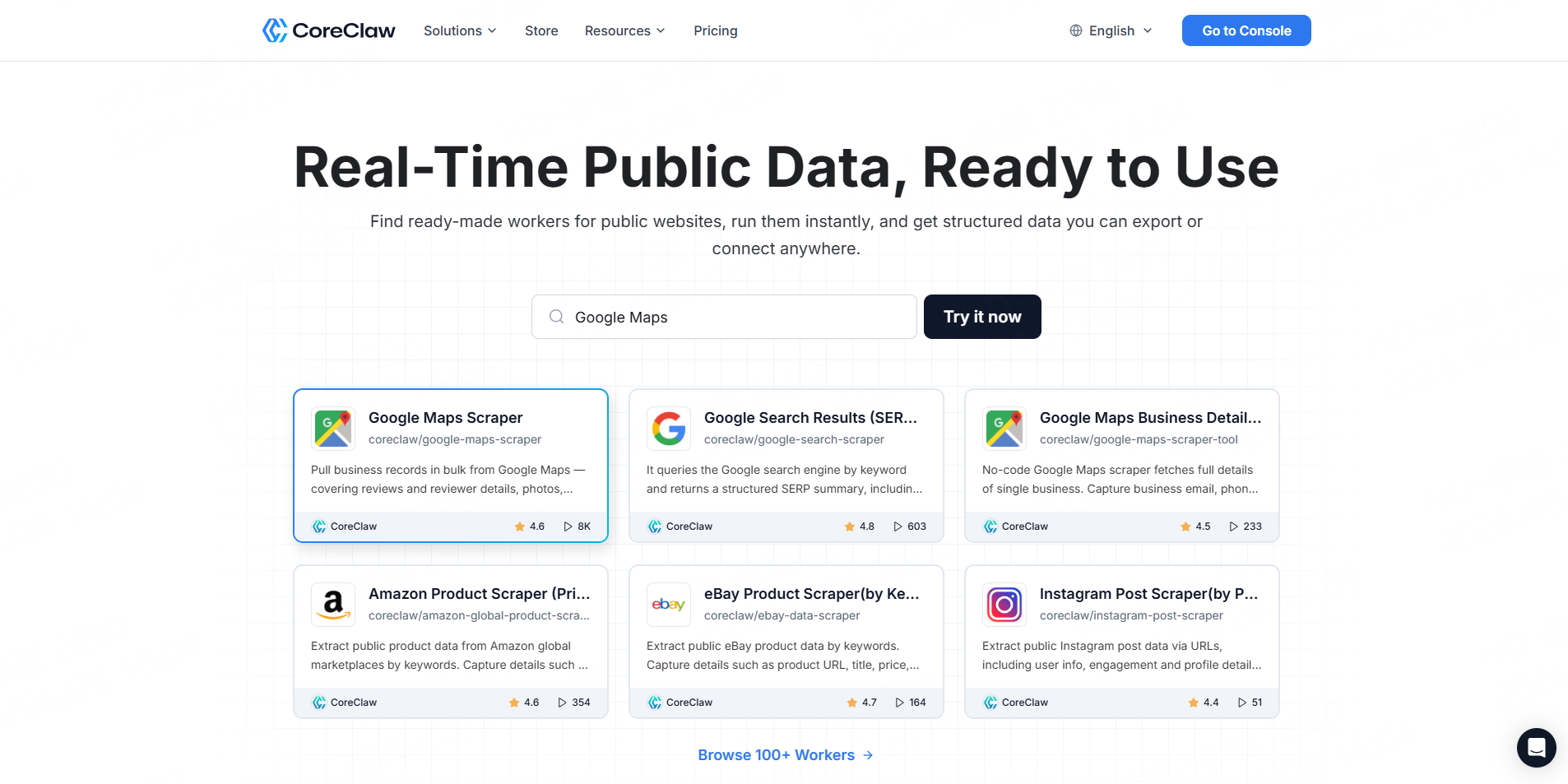
CoreClaw is a practical option for teams that want to collect public local business data without writing code. Workers let users enter inputs, run data collection tasks, and export structured results. CoreClaw emphasizes 100+ ready-made tools, no-code usage, CSV/Excel/JSON export, API access, and paying only for successful results.
Best for: Google Maps-based local lead lists, local market research, agency prospecting, and teams that need cleaner structured outputs before export.
Key features:
- Ready-made Google Maps business data Worker
- No-code workflow for business users
- CSV, Excel, JSON, and API export
- Cleaned and filtered structured data
- Pay only for successful results
- Custom Worker option for niche sources
Pros: CoreClaw is easy for non-technical users because teams do not need to manage scripts, proxies, browser automation, or scraping infrastructure. It is especially useful when the goal is a spreadsheet-ready dataset for sales, SEO, or research workflows.
Cons: CoreClaw is strongest when a matching Worker already exists. For niche directories or unusual websites, users may need to request a custom Worker.
Use case: A local SEO agency can collect dentists, restaurants, gyms, or clinics by city, filter by rating or website availability, export the data to Excel, and review the results before outreach.
2. Outscraper
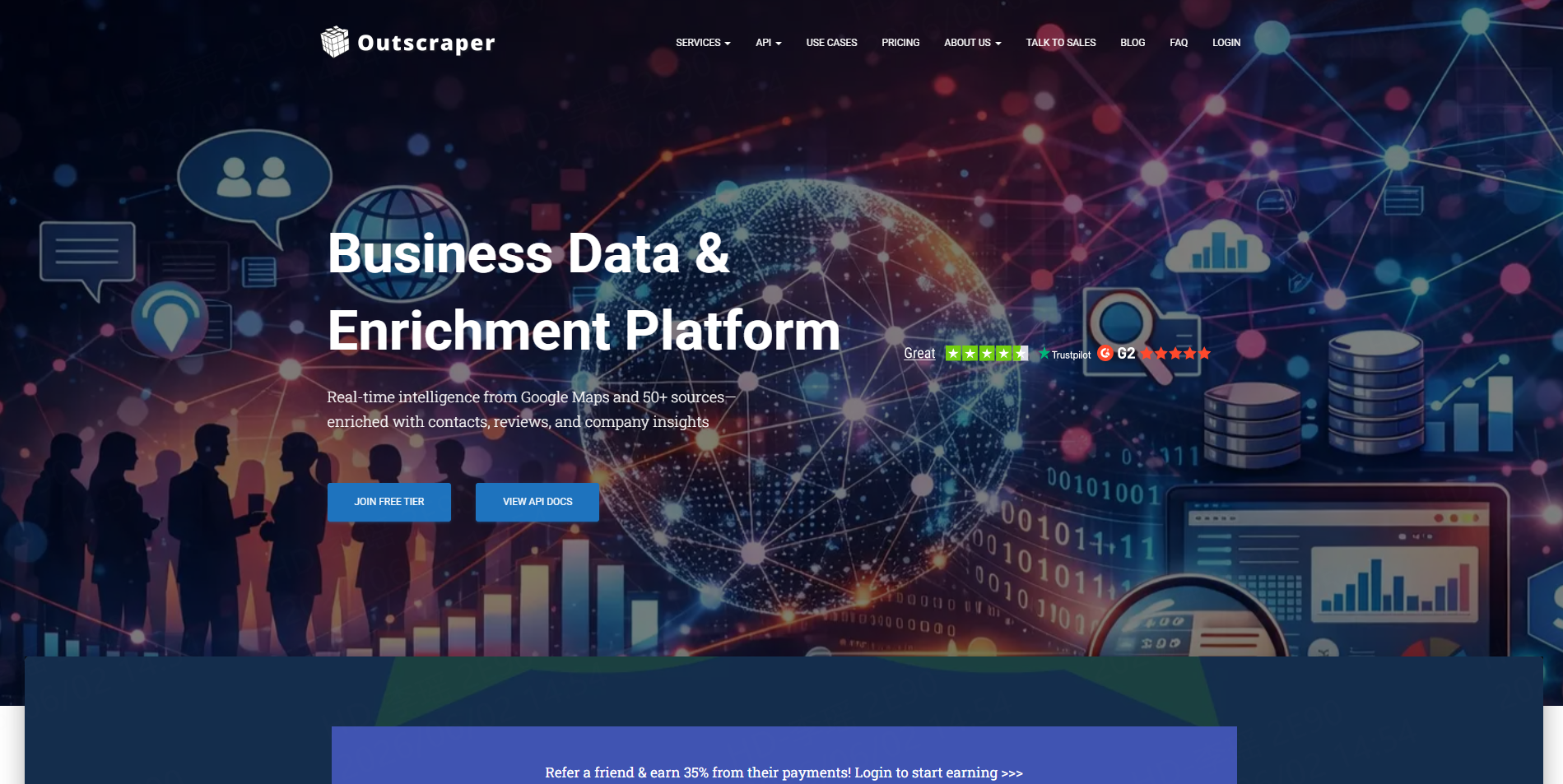
Outscraper is a known Google Maps scraping and enrichment platform. Its Google Maps Scraper page says users can extract business names, emails, phone numbers, reviews, ratings, and related business information. It also offers email and contact enrichment through additional services.
Best for: Teams that want Google Maps data plus optional contact enrichment.
Key features:
- Google Maps scraping
- Email and contact enrichment options
- Phone number and review data
- Pay-as-you-go pricing model
- API and export workflows
Pros: Outscraper is focused on Google Maps and local business extraction. Its pricing page states that it has no monthly fees and uses pay-as-you-go billing, which can fit teams with variable usage.
Cons: Enrichment and large-scale use can add cost. Teams should review pricing carefully before running broad campaigns.
Use case: A growth team can collect businesses from Google Maps, enrich available contact details, and export the data for sales outreach.
3. Apify
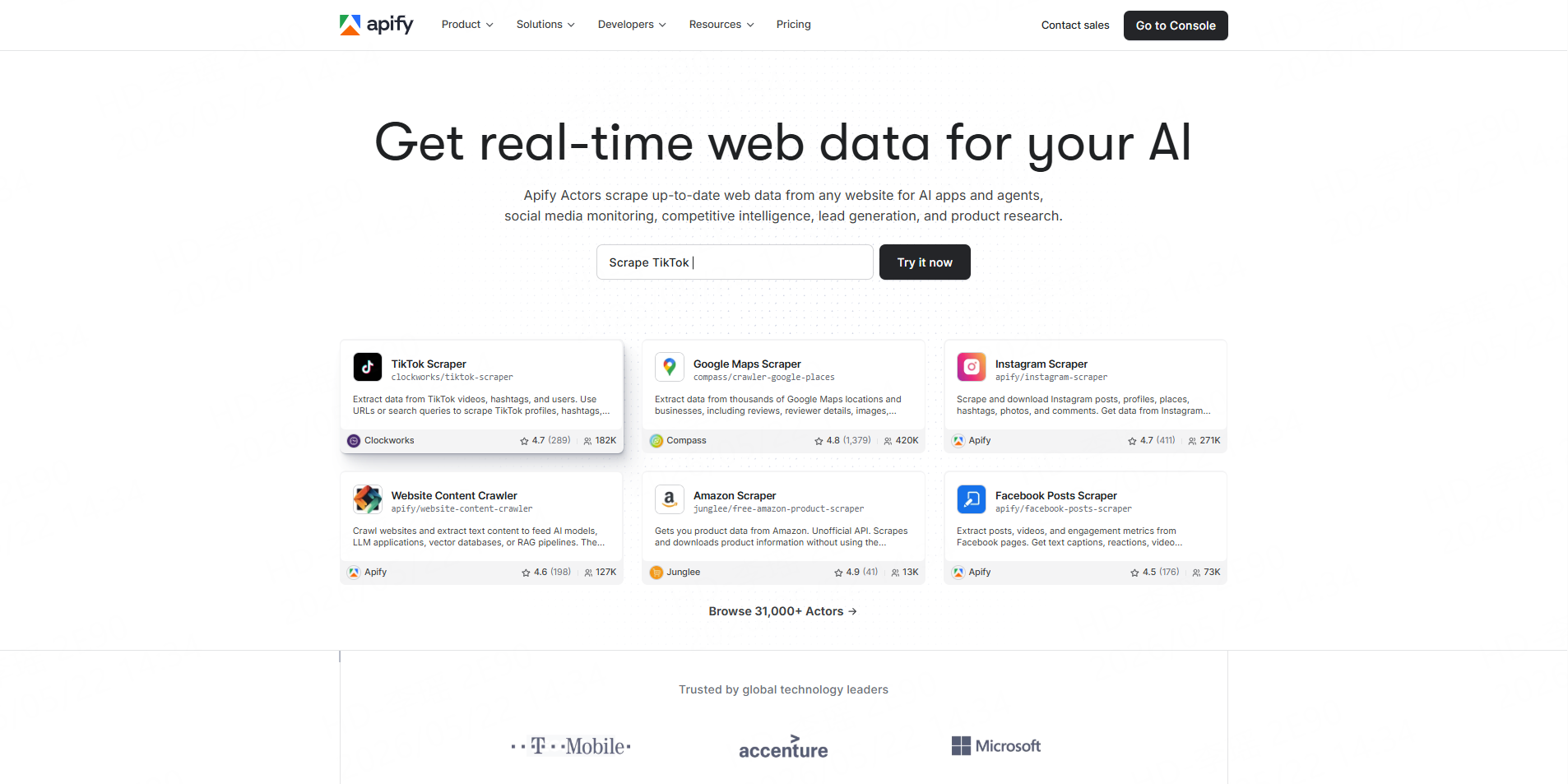
Apify is a cloud automation platform with a marketplace of scrapers called Actors. For local business data, Apify offers multiple Google Maps-related Actors. One Google Maps Scraper page describes extraction of thousands of locations and businesses, including reviews, images, contact info, opening hours, prices, and export or API workflows.
Best for: Technical users who want flexibility, scheduling, API access, and multiple scraper options.
Key features:
- Actor marketplace
- Google Maps scraping options
- API access
- Scheduling and monitoring
- Export and integration options
- Custom automation potential
Pros: Apify is flexible. Users can choose different Actors, test outputs, and integrate runs into technical workflows.
Cons: Quality and pricing may vary by Actor. Non-technical users may face a learning curve when comparing Actors, configuring inputs, and handling outputs.
Use case: A data operations team can schedule recurring Google Maps scraping runs and connect results to internal dashboards or data pipelines.
4. Scrap.io
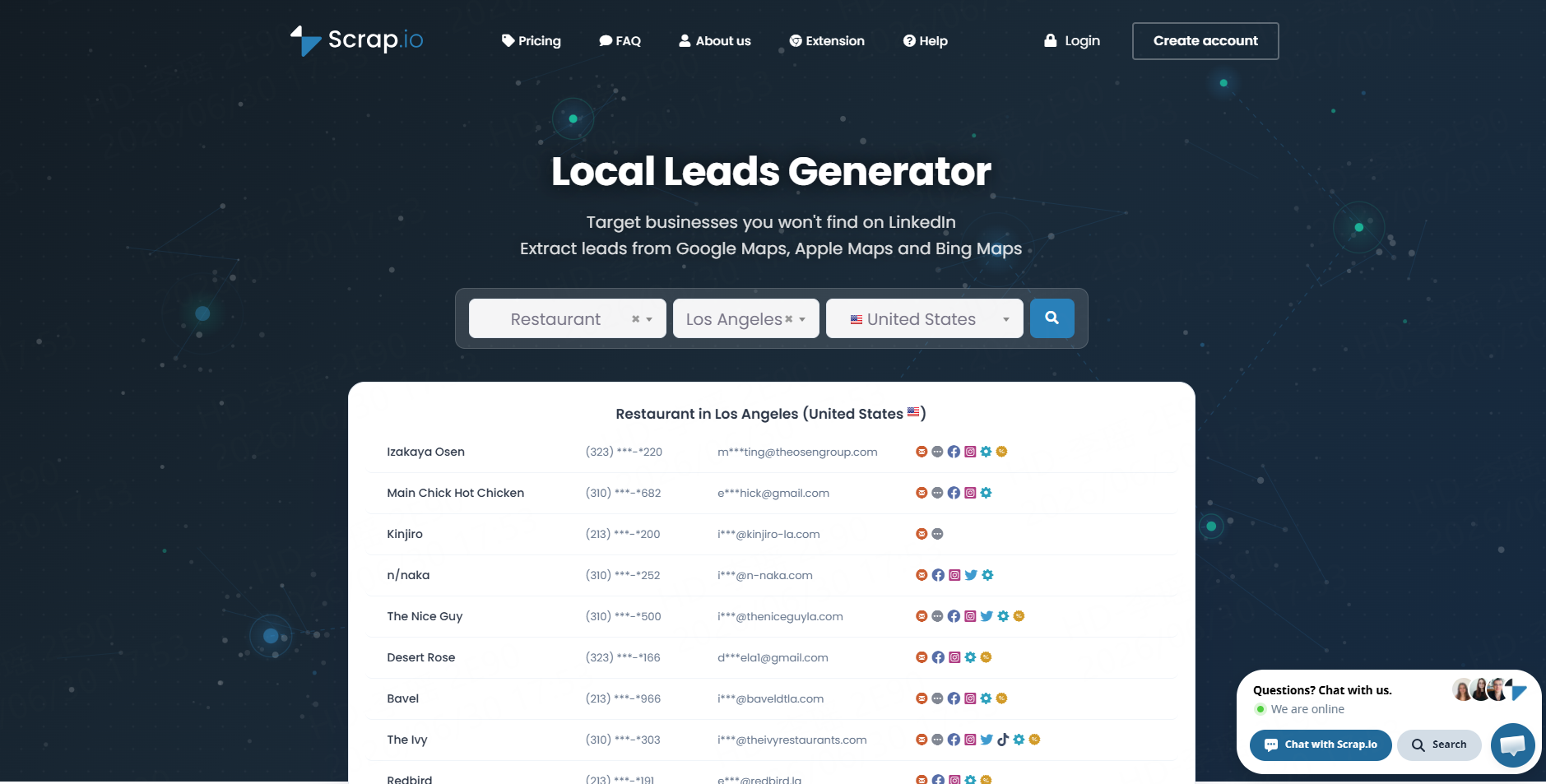
Scrap.io is a local lead generation scraper focused on map-based business data. Its website says it can scrape Google Maps, Apple Maps, and Bing Maps, and extract business names, addresses, phone numbers, emails, websites, social media links, reviews, and more across many countries.
Best for: Teams that want one tool for multiple map platforms.
Key features:
- Google Maps, Apple Maps, and Bing Maps scraping
- Business contact fields
- Email, website, phone, and social links
- Local lead filters
- Export workflow
Pros: Multi-map coverage is useful when teams do not want to rely on one source. It can also help compare coverage across platforms.
Cons: Teams should test field completeness because email and social link availability can vary by business, category, and country.
Use case: A local marketing agency can compare restaurants or clinics across Google Maps, Apple Maps, and Bing Maps to build a broader prospect list.
5. Lead Scrape
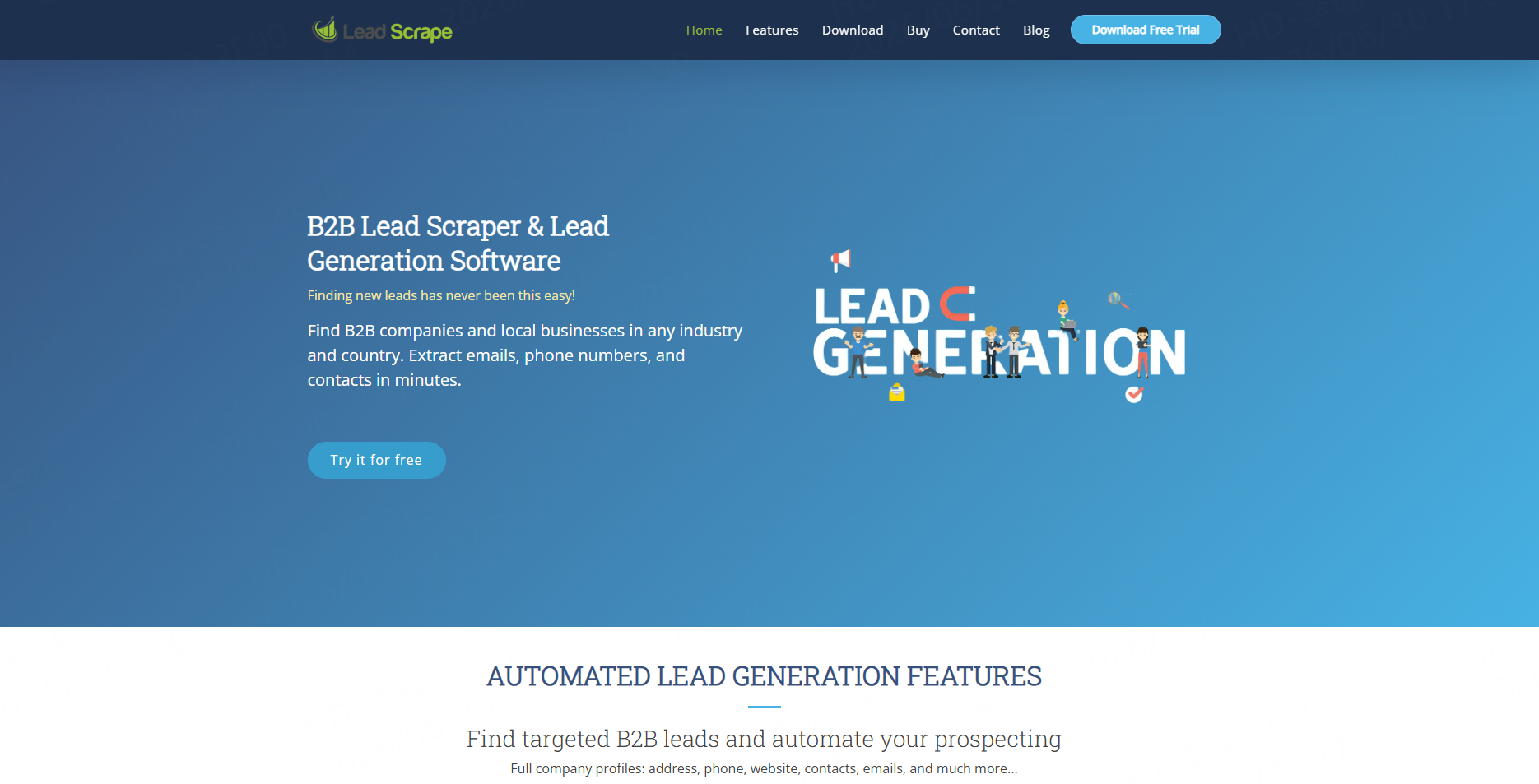
Lead Scrape is a B2B lead scraper and local business lead generation tool. Its website says it helps users find B2B companies and local businesses in different industries and countries, and extract emails, phone numbers, contacts, addresses, websites, and company profiles.
Best for: Small businesses and outbound teams that want desktop-style lead scraping software.
Key features:
- Local business discovery
- Email and phone extraction
- Company profile data
- Industry and country targeting
- Desktop software for Windows and Mac
Pros: Lead Scrape is positioned for users who want prospecting software rather than a developer API. It can be practical for small teams that prefer installed software.
Cons: Desktop workflows may be less convenient for teams that need cloud scheduling, API integration, or shared team operations.
Use case: A small agency can search for local businesses in target industries and prepare outreach lists with available contact details.
6. PhantomBuster
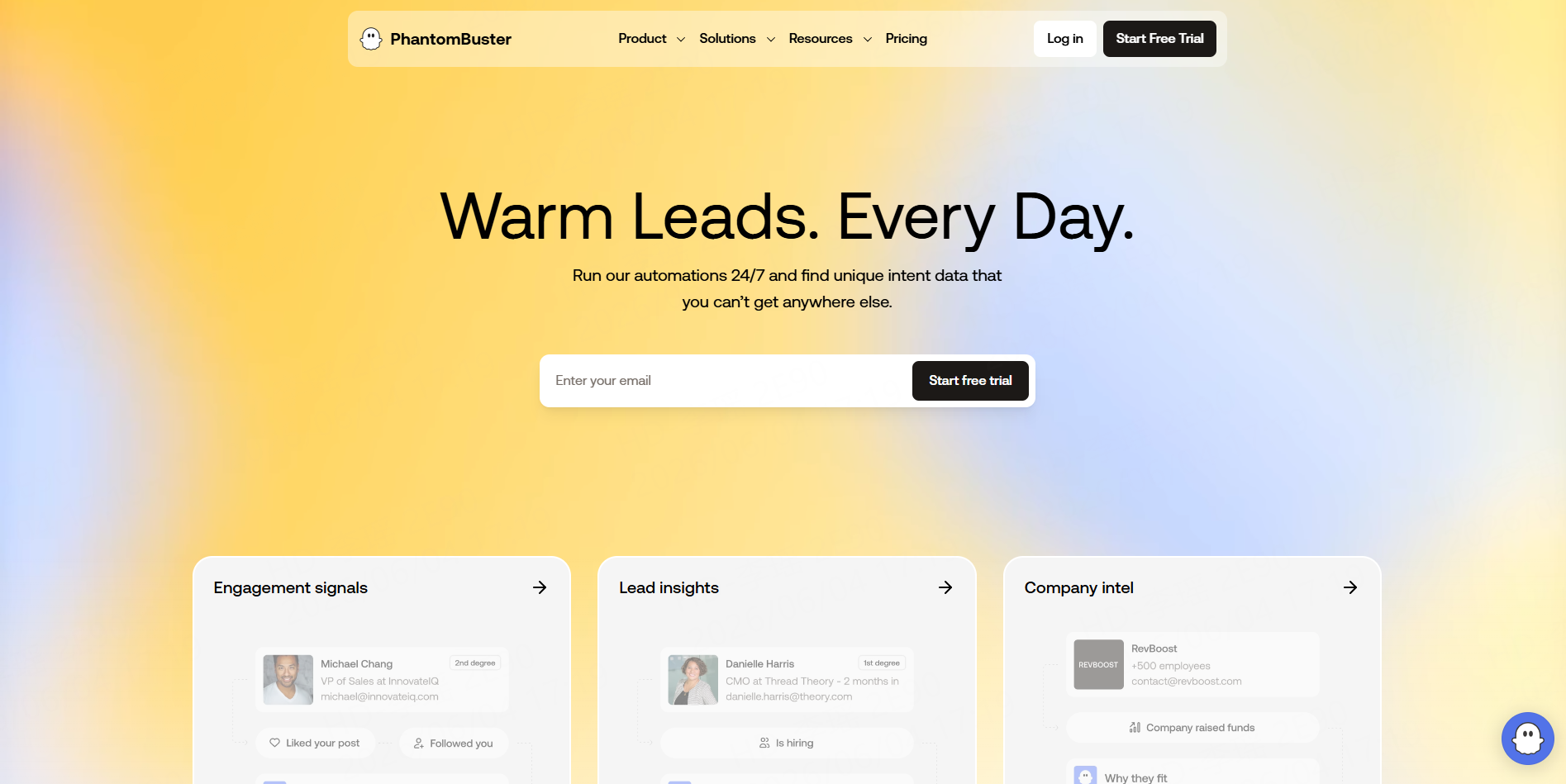
PhantomBuster is an automation platform with workflows for lead generation and web tasks. Its Google Maps Search Export automation says it can extract local business results into a CSV file without requiring users to code against Google Maps API.
Best for: Growth teams that want Google Maps extraction as part of a broader automation workflow.
Key features:
- Google Maps Search Export
- CSV output
- Contact enrichment flows
- Workflow automation
- Integrations with other prospecting steps
Pros: PhantomBuster is useful when scraping is only one part of a larger workflow, such as finding businesses, enriching contacts, and moving results into a spreadsheet.
Cons: It may be more workflow-oriented than pure data-extraction-oriented. Users should check run limits, setup steps, and the amount of manual configuration needed.
Use case: A growth marketer can extract Google Maps businesses, enrich contact data, and send results into a prospecting workflow.
7. Bright Data
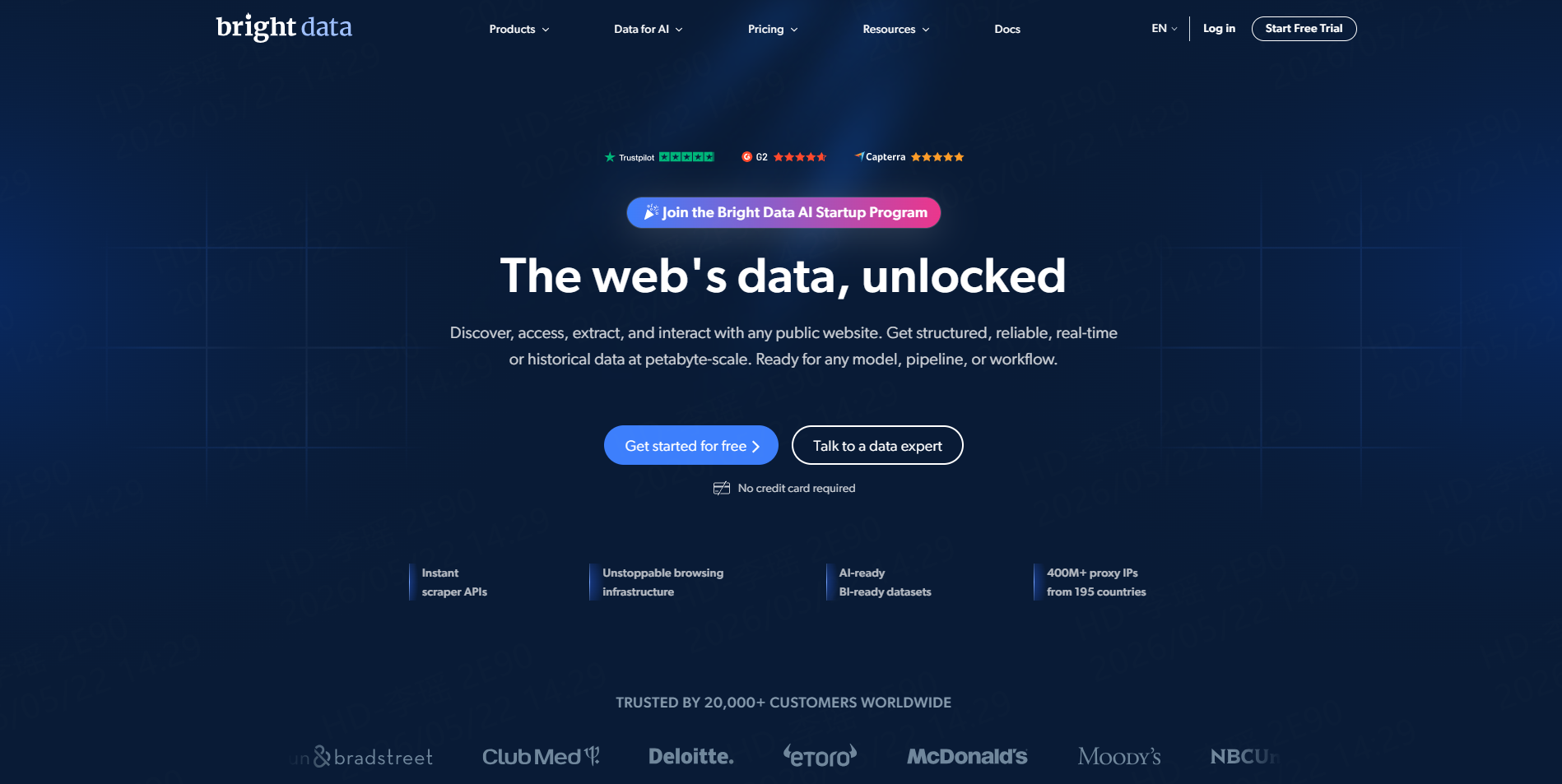
Bright Data is an enterprise web data platform. Its scraper documentation says it offers hundreds of pre-built scrapers, including coverage for Google Maps and other large platforms, with structured JSON or CSV output and no need to manage proxies, browsers, anti-bot systems, or parsing.
Best for: Enterprise teams and data teams that need scalable infrastructure and structured data delivery.
Key features:
- Web Scraper APIs
- Pre-built scrapers
- Structured JSON/CSV output
- Dataset options
- Enterprise infrastructure
- Proxy and unblocking capabilities
Pros: Bright Data is suitable for high-volume, technical, or enterprise workflows where reliability, infrastructure, and structured delivery matter.
Cons: It may be more complex and expensive than needed for small agencies or business users who only need a simple CSV export.
Use case: A large company can use Bright Data to collect structured local business datasets at scale and connect them to internal analytics systems.
A Practical Workflow for Cleaner Local Business Data
A good local business scraping workflow should start with a clear target. For example, “plumbers in Dallas,” “restaurants in Seattle with low ratings,” or “dentists in Austin without strong websites.”
Next, collect only the fields that matter. For most campaigns, business name, website, phone number, address, category, rating, review count, and source URL are enough. If email is included, verify it before outreach.
Then clean the dataset. Remove duplicates, closed businesses, irrelevant categories, and records with missing critical fields. Add tags such as city, industry, campaign, and priority.
Finally, export the data into the right format. CSV and Excel are best for spreadsheet review. JSON and API access are better for developers, dashboards, enrichment workflows, and recurring pipelines.
Final Thoughts
The best local business scraper depends on your workflow, not just the number of records a tool can collect.
If your team needs usable business data quickly, choose a tool that supports clear inputs, relevant fields, clean output, and easy export. If your team needs automation or large-scale infrastructure, choose a platform with API access, scheduling, monitoring, and structured delivery.
With CoreClaw, teams can run ready-made Workers such as the Google Maps B2B Leads Generation Scraper, collect public local business data without coding, export CSV/JSON/Excel files, and use cleaned and filtered outputs before importing records into sales or research workflows.
A cleaner local business dataset leads to better targeting, better research, and fewer wasted outreach efforts.
Frequently Asked Questions

Content Writer @CoreClaw · Last Updated 2026-06-30
Lena Kovalenko researches how modern software systems expose and organize information online. Her writing focuses on the interaction between APIs, web platforms, and automated data workflows. When exploring a topic she typically compares multiple tools to understand their design assumptions. These comparisons often lead to articles that help readers see how different technical approaches influence reliability and efficiency.
View Author Profile →Disclaimer: All information on the CoreClaw Blog is provided “as is” and for informational purposes only. CoreClaw makes no representations and assumes no liability for any consequences arising from your use of information published on the CoreClaw Blog or on any third-party websites linked from it. Before any scraping activity, consult legal counsel, review the target website’s terms of service, and obtain permission where required.