In today’s increasingly competitive local customer acquisition environment, many businesses are starting to rethink "where customers come from." Traditional advertising has become expensive and delivers lower conversion rates, while obtaining potential customer information through Google Maps is becoming a more efficient approach. This article focuses on local business leads, systematically explaining how to use Lead Scraper tools for automated lead data collection, while comparing five mainstream tools to help you find the right solution for businesses at different growth stages.
Quick Comparison: 5 Best Lead Scraper Tools
Tool | Platform Type | Starting Price | Promotional Plan | Best For |
CoreClaw | Ready-to-use web data scraping platform | $39/month | 🎁10k results for only $9 | Bulk local business data collection |
Apollo.io | Sales intelligence platform | $49/month | ❌️None | B2B lead generation |
Lead Scrape | Desktop application | $97 one-time | ❌️None | Small local business customer acquisition |
Apify | Automated scraping platform | $29/month | ❌️None | Custom scraping for technical teams |
ZenRows | Scraping infrastructure platform | $69/month | ❌️None | Stable web data scraping |
What are Local Business Leads?
Local Business Leads refer to potential customer information from locally operating businesses, which usually include real offline businesses such as restaurants, repair services, educational institutions, gyms, and more. This type of information typically contains key fields such as contact details, addresses, and industry categories, which are used for subsequent sales or marketing conversions. In local customer acquisition systems, it serves as the most fundamental data source connecting businesses and customers.
1. This data helps businesses quickly identify target companies within specific cities or regions.
2. It usually includes core contact information such as phone numbers, email addresses, and locations that can be used to directly reach potential customers.
3. It is an important foundational resource for building local sales channels and market expansion strategies.
4. In many local lead generation businesses, local leads are the core asset source.
What is a Lead Scraper?
A Lead Scraper is a tool used to automatically collect potential customer information. Its core function is to extract business leads from publicly available pages on the internet without requiring us to manually organize the data one by one. It transforms the traditionally time-consuming customer acquisition process into an automated and scalable workflow, making it suitable for sales, marketing, local customer acquisition, and many other scenarios. In practical applications, it helps businesses quickly build stable customer acquisition channels.
In terms of data sources, Lead Scrapers typically collect information from multiple public platforms, such as local business on Google Maps, company profiles on LinkedIn, and business information on Facebook pages, among others. These platforms already contain a large amount of structured or semi-structured business data. Through lead scraping technology, this fragmented information can be consolidated into usable customer leads, supporting subsequent marketing outreach and business development processes.
Why Scrape Local Business Leads from Google Maps?
Google Maps has become one of the most concentrated and frequently updated sources of local business information worldwide. Nearly every offline business creates or maintains its business profile on the platform. This means we can quickly obtain a large amount of real local business information from a single platform without repeatedly searching and organizing data across multiple websites.
● Wide coverage: Google Maps covers nearly every city and industry, allowing local restaurants, service providers, retailers, and other businesses to form a high-density source of local business leads.
● Clear data structure: Business information usually includes fields such as company name, phone number, address, and rating, making it highly suitable for lead generation businesses.
● Clear commercial intent: Most businesses displayed on Google Maps are actively operating, making them high-certainty potential customer pools suitable for sales conversion.
● Real-time update mechanism: Business information is continuously updated through customer reviews and platform maintenance, making the data closer to real market conditions.
● Suitable for automation and scaling: Combined with Google map scraper tools, it supports bulk extraction and serves as an important foundation for building Google Maps scraping workflows.
What Value Do Local Business Leads Provide?
The core value of Local Business Leads is not simply “obtaining a list,” but helping businesses build a sustainable customer acquisition system. Through real local business information, companies can reach target markets more accurately while reducing the cost of ineffective communication. In practical business operations, this type of data has become one of the core inputs for sales, marketing, and business expansion systems. At the same time, it is also a foundational data source for many local business lead generation systems.
Sales Development
Scraping Local Business Leads helps sales teams quickly identify actively operating local businesses and directly reach out to them, thereby shortening the path from lead generation to conversion.
Marketing Campaigns
By analyzing local business data, marketing teams can more accurately select target regions and industries for advertising campaigns, improving ad conversion efficiency and optimizing overall customer acquisition costs.
Local Business Expansion
Businesses can use local business data to identify uncovered market regions, providing decision-making support for opening new stores or expanding services while reducing trial-and-error costs.
Customer Relationship Management
After importing scraped Local Business Leads into CRM systems, businesses can continuously track and manage customer relationships, supporting repeat purchases, cross-selling, and long-term partnerships.
Best Tools for Scraping Local Business Leads
CoreClaw
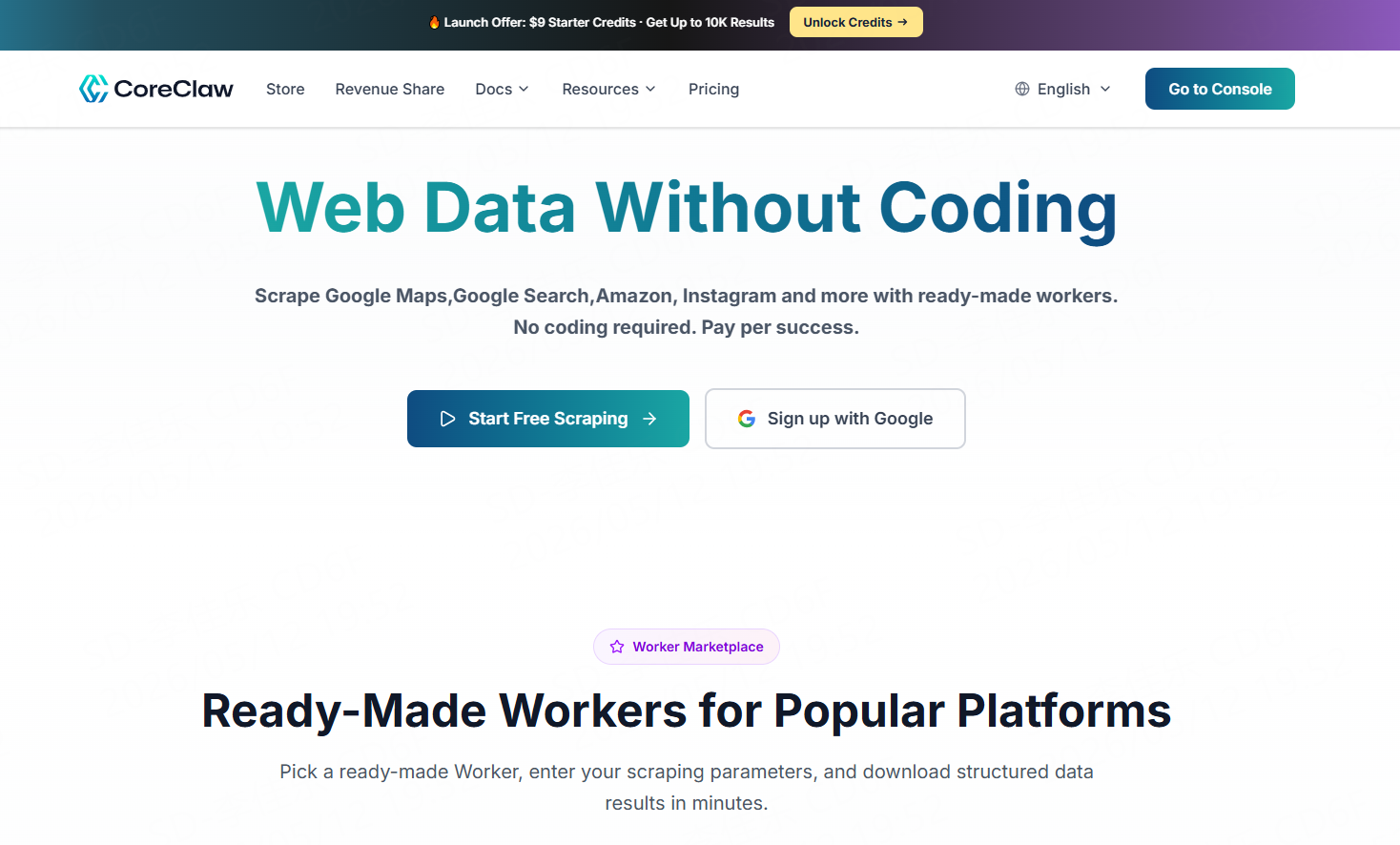
CoreClaw is a ready-to-use web scraping platform built around the concept of “no-code, direct access to target data,” designed for enterprises, marketing teams, and sales development teams that need large-scale public business data collection. It offers 100+ ready-made scraper templates (called “workers”) that help users automatically extract structured data from platforms such as Google SERPs, Google Maps, LinkedIn, and more. Compared with many tools that only provide basic scraping capabilities, CoreClaw places greater emphasis on stability, scalability, and practical business implementation, gradually becoming an important choice for teams building automated lead generation systems in the data collection industry.
For Local Business Leads needs, CoreClaw provides a Google Maps B2B Leads Generation Scraper (by keywords) and a Google Maps Reviews Scraper (by detail URL). Users can batch collect local business information by selecting the scraping method and configuring related filtering conditions, including core fields such as company names, phone numbers, email addresses, websites, ratings, addresses, and social media links. This approach significantly reduces the time cost of manual data organization and helps businesses quickly build their own potential customer databases.
Pros:
● Google Maps scraper supports bulk extraction of target data, suitable for sales prospecting, local SEO, and similar business needs.
● Provides structured output formats (JSON/CSV, etc.) that can be directly used for business analysis.
● Supports precise filtering based on country, region, language, and other conditions to improve lead quality.
● No programming requirements, allowing non-technical operations teams to get started quickly.
● Supports multiple web data sources, making it suitable for expanding into different lead generation scenarios.
● Offers high stability in large-scale web scraping leads tasks.
Cons:
● Provides a large number of ready-made workers, which may require some time to evaluate and select.
Pricing:
● Launch Offer — $9/30 days (~10k results)
● Starter — $39/30 days (~50k results)
● Pro — $89/30 days (~148.3k results)
● Business — $199/30 days (~221.1k results)
Apollo.io
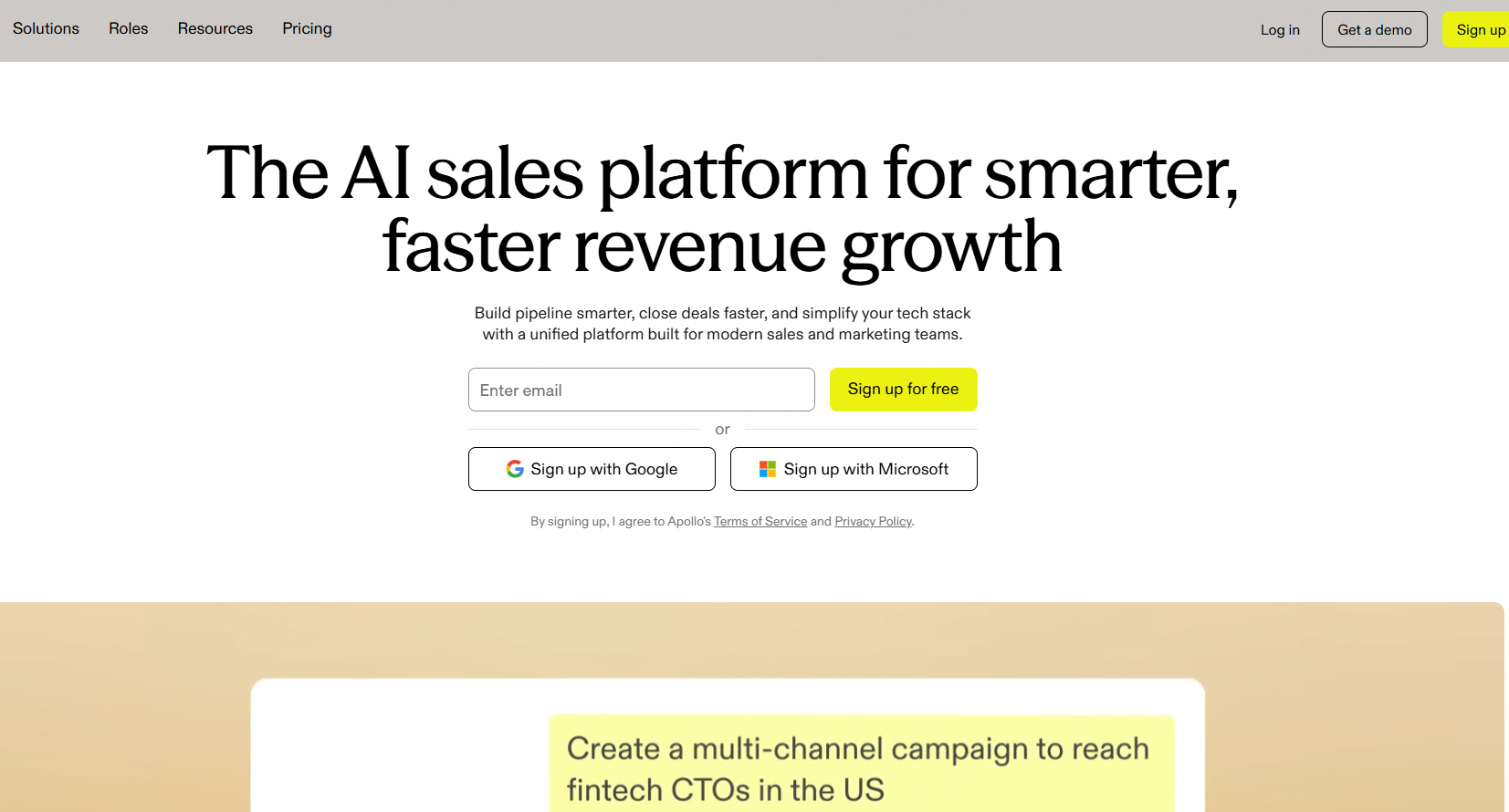
Apollo.io is a customer data platform centered around B2B sales development. It primarily helps businesses find potential customers, build sales prospect lists, and optimize outreach workflows. The platform integrates company databases, contact search, email outreach, and sales automation features, making it widely used by sales teams for customer acquisition and business growth. Compared with traditional lead scraping tools, Apollo.io follows more of a “ready-made data platform” model, allowing users to directly search and filter target customers without building complex scraping workflows themselves.
Pros:
● Built-in massive database of companies and contacts for quickly building sales prospect lists.
● Provides CRM synchronization capabilities for unified customer data management.
● High data update frequency, suitable for continuous customer development scenarios.
● User-friendly interface that allows sales teams to onboard quickly.
Cons:
● Focuses more on B2B company data rather than Google Maps local business scraping.
● Free version has significant data and feature limitations.
● Limited flexibility for teams requiring highly customized data collection.
● Advanced plans are relatively expensive, increasing long-term costs for small teams.
Pricing:
● Basic — $49/month (30,000 credits)
● Professional — $79/month (48,000 credits)
● Organization — $119/month (72,000 credits)
Lead Scrape
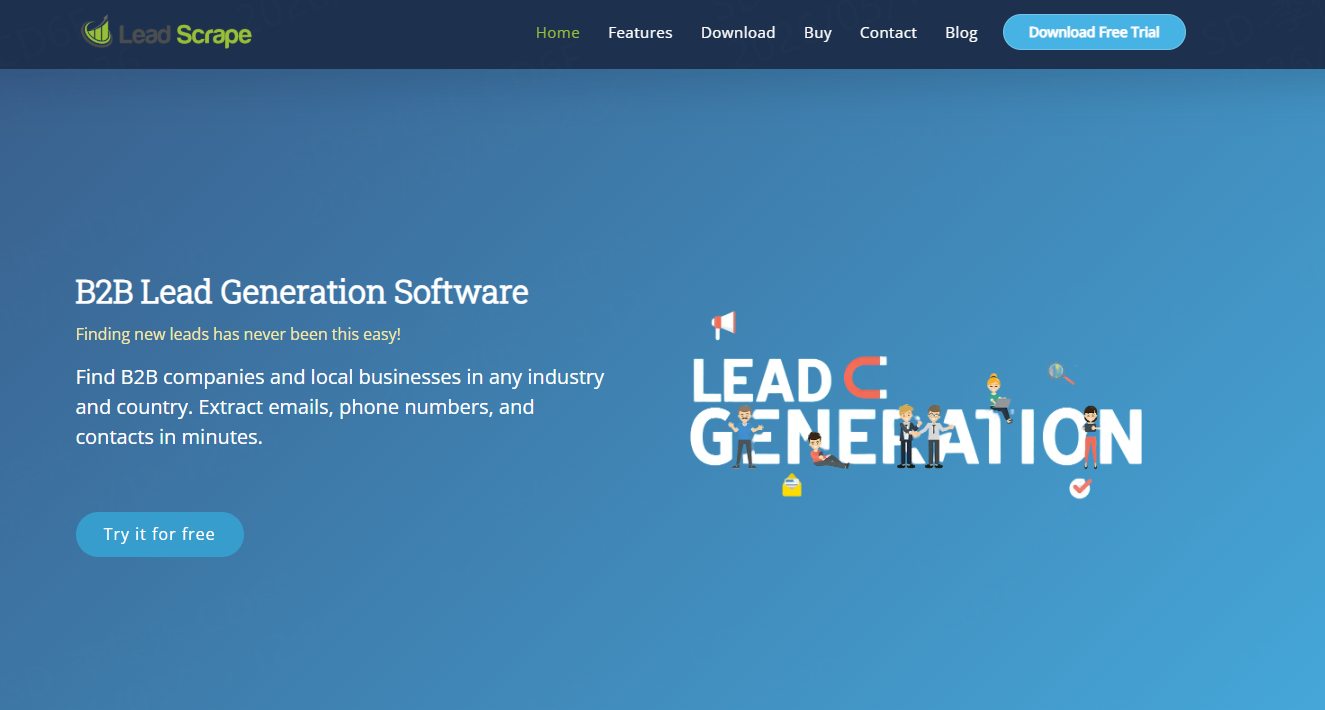
Lead Scrape is a desktop application focused on local business data acquisition, mainly helping users quickly collect business contact information and basic commercial data. Its positioning is more lightweight, making it suitable for small and medium-sized teams, individual sales representatives, and users just beginning to build customer acquisition systems. Compared with complex automation platforms, Lead Scrape emphasizes simplicity and direct usability. Users only need to input industry or regional keywords to quickly obtain related lead data.
Pros:
● Simple workflow that allows non-technical users to quickly complete data collection.
● One-time purchase model is more friendly for small teams.
● Suitable for early-stage market testing and low-cost customer acquisition.
● Intuitive software interface with a relatively low learning curve.
Cons:
● Data sources and coverage are relatively limited.
● Not suitable for large-scale automated collection tasks.
● Limited advanced filtering and customization features.
● Data update capabilities are less stable compared to cloud platforms.
● Lacks advanced workflows and team collaboration features.
Pricing:
● Standard — $97/year (3 data sources)
● Business — $247/year (7 data sources)
Apify
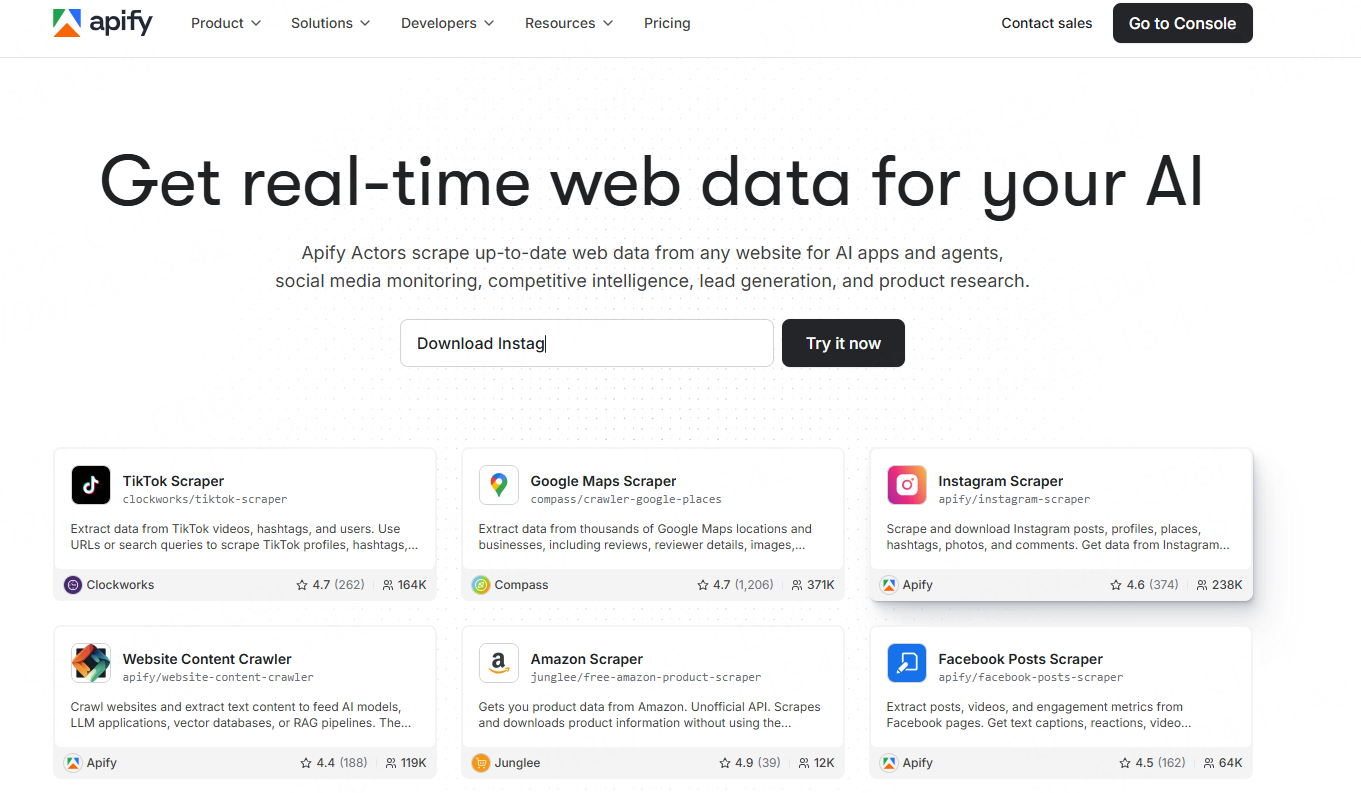
Apify is a platform focused on web automation and data collection, mainly designed for businesses and development teams that need large-scale public web data scraping. It provides a large number of ready-made actors that can extract structured data from Google Maps, social media platforms, e-commerce websites, and directory sites. Compared with traditional single-function scraping tools, Apify is more like a scalable data automation platform, supporting both low-code usage and deep developer customization.
Pros:
● Supports scraping across multiple websites and platforms with broad coverage.
● Supports cloud execution, making it suitable for long-term automated workflows.
● Highly customizable for technical teams that need extended functionality.
● Strong developer community and documentation support.
Cons:
● Higher learning curve for users without technical backgrounds.
● Advanced feature configuration can be relatively complex.
● Large-scale tasks may generate high operational costs.
● Some scraping workflows require self-maintenance and optimization.
● Not an instant-ready local lead generation tool.
Pricing:
● Starter — $29/month + pay as you go
● Scale — $199/month + pay as you go
● Business — $999/month + pay as you go
ZenRows
ZenRows is an automation platform focused on web scraping infrastructure. It primarily helps businesses reliably collect public web data while solving anti-scraping restrictions on complex websites. It is more oriented toward foundational data extraction capabilities rather than ready-made customer databases. Many companies use ZenRows to build their own automated data systems for large-scale extraction of public information from Google Maps, local business directories, and company websites.
Pros:
● Supports large-scale concurrent tasks to meet long-term data collection needs.
● Supports automatic proxy rotation to improve scraping stability.
● Comprehensive documentation and developer support for rapid deployment.
Cons:
● More developer-oriented and less user-friendly for non-technical users.
● Requires users to build their own data processing and cleaning workflows.
● Higher barrier to entry for companies without technical teams.
● Advanced proxy usage and high-concurrency tasks increase overall costs.
Pricing:
● Developer — $69/month
● Startup — $129/month
● Business — $299/month
Choosing the Right Lead Scraper: Decision Tree
When choosing a Lead Scraper, the most important factor is not how many features the tool offers, but whether it aligns with your current lead generation goals, team size, and business growth stage. The following decision path can help you identify the right solution more quickly.
● Do you need to batch collect Google Maps local business data?
✅ Yes → Prioritize CoreClaw
❌ No → Move to the next step.
● Do you want to skip complicated workflows and directly obtain sales leads?
✅ Yes → Choose CoreClaw
❌ No → Move to the next step.
● Do you want to start customer acquisition quickly without complex technical setup?
✅ Yes → Choose Lead Scrape.
❌ No → Move to the next step.
● Do you need precise business filtering through keywords, target URLs, or cities?
✅ Yes → Choose CoreClaw for refined local business development.
❌ No → Move to the next step.
● Do you have a development team and require highly customized scraping logic?
✅ Yes → Choose Apify or ZenRows.
❌ No → Move to the next step.
● Are you more focused on B2B contact development rather than map-based business data?
✅ Yes → Choose Apollo.io.
❌ No → Choose Lead Scrape.
Conclusion
In today’s local customer acquisition environment, businesses are increasingly relying on real and sustainable customer data to drive growth rather than depending solely on advertising for short-term traffic. Whether for sales development, market expansion, or customer management, high-quality leads have become an essential foundation for business growth. As public business data becomes increasingly abundant, platforms including Google Maps are becoming important sources of potential customer information. By using Lead Scrapers, businesses can not only improve customer acquisition efficiency, but also gradually build a more stable local growth system.
Frequently asked questions

Content Writer @CafeScraper · Last Updated 2026-05-13
Lena Kovalenko researches how modern software systems expose and organize information online. Her writing focuses on the interaction between APIs, web platforms, and automated data workflows. When exploring a topic she typically compares multiple tools to understand their design assumptions. These comparisons often lead to articles that help readers see how different technical approaches influence reliability and efficiency.
View Author Profile →Disclaimer: Views expressed are solely the author's and do not constitute business commitments.