Facebook can be useful for lead research because public Pages, profiles, groups, posts, and discussions can reveal businesses, creators, professional backgrounds, websites, and contact details when publicly displayed, and signals about what an audience cares about.
But scraping more Facebook records does not automatically produce better leads. A practical lead-generation workflow needs structured data that can be filtered, checked, enriched, and moved into a CRM or outreach process. That makes tool selection different from choosing a scraper purely for social media monitoring.
What Makes Facebook Data Useful for Lead Generation?
Facebook lead generation usually starts with one of three signals: a relevant business Page, a person matching a target profile, or engagement inside a relevant community.
For B2B prospecting, business Pages can be especially useful because public fields may include websites, addresses, phone numbers, categories, Messenger links, and other company information. Profile and engagement data can provide additional context, but public availability varies significantly between records.
A good Facebook lead scraper should therefore make it easy to collect relevant fields, remove irrelevant records, and export the remaining dataset for qualification.
Top 5 Facebook Scraper Tools Compared
Tool | Best For | No-Code | Lead Strength |
CoreClaw | Structured lead research | Yes | Multiple Facebook data types |
PhantomBuster | Automation sequences | Yes | Profiles and group members |
SocLeads | Email-first lists | Yes | Public email extraction |
IGLeads | Social prospecting | Yes | Keyword-based contacts |
Apify | Custom data pipelines | Partial | Page/contact data + API |
1. CoreClaw
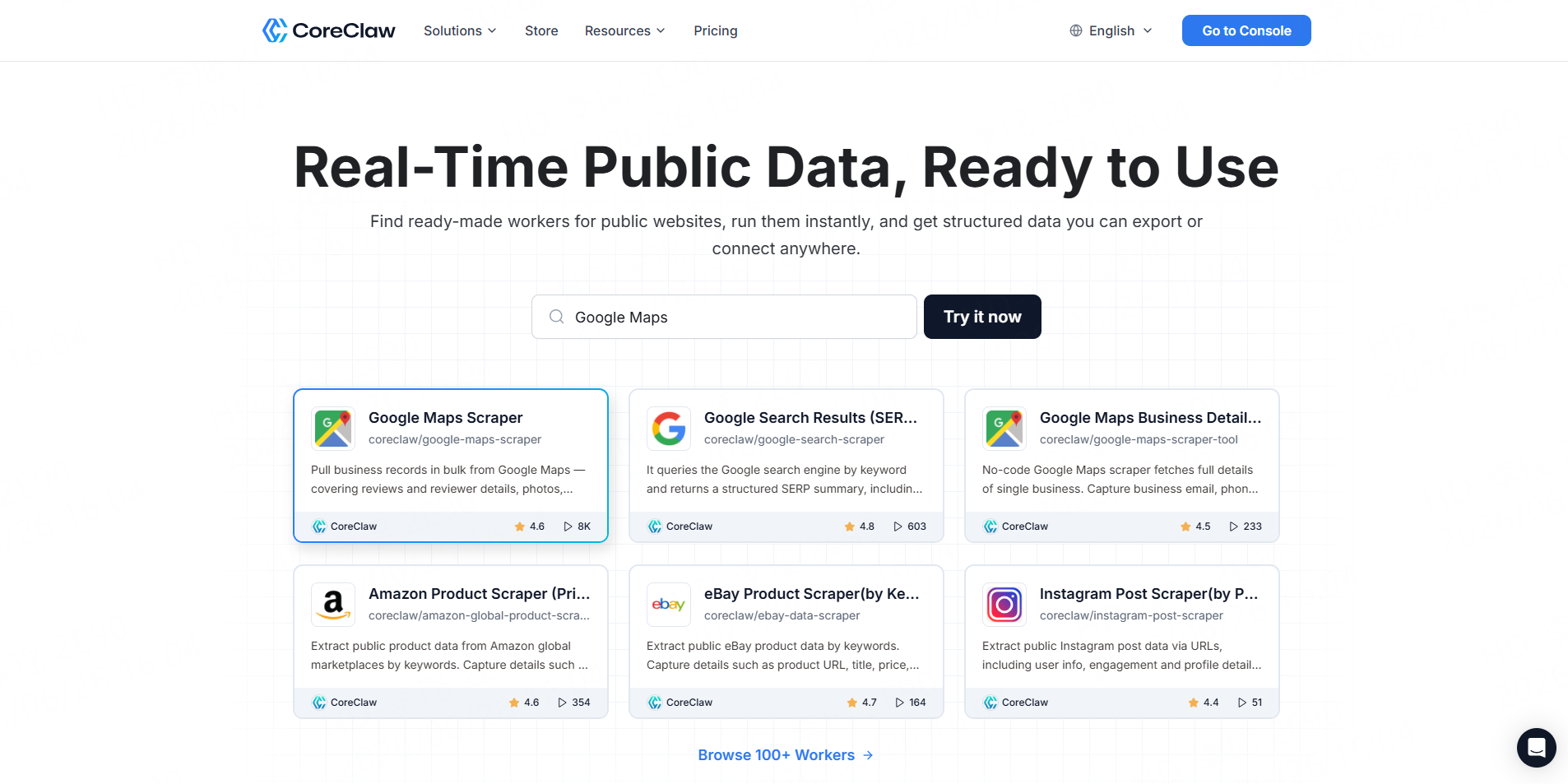
CoreClaw provides a collection of ready-made Facebook scrapers covering profiles, posts, comments, events, Pages, and other supported public Facebook data. Its Facebook Profile Scraper can return public profile details including work history, location, profile links, social information, and contact fields when available.
Best for: Sales research, market mapping, audience qualification, and teams that do not want to build scraping infrastructure.
CoreClaw’s advantage for lead generation is that teams can combine different signals. A prospect list might start with profiles or Pages, then use the Facebook Posts Scraper or Facebook Comments Scraper to add context before filtering the results.
Outputs are structured for downstream use, and recurring processes can connect through the CoreClaw API. Applicable Workers use pay-only-for-successful-results billing.
2. PhantomBuster
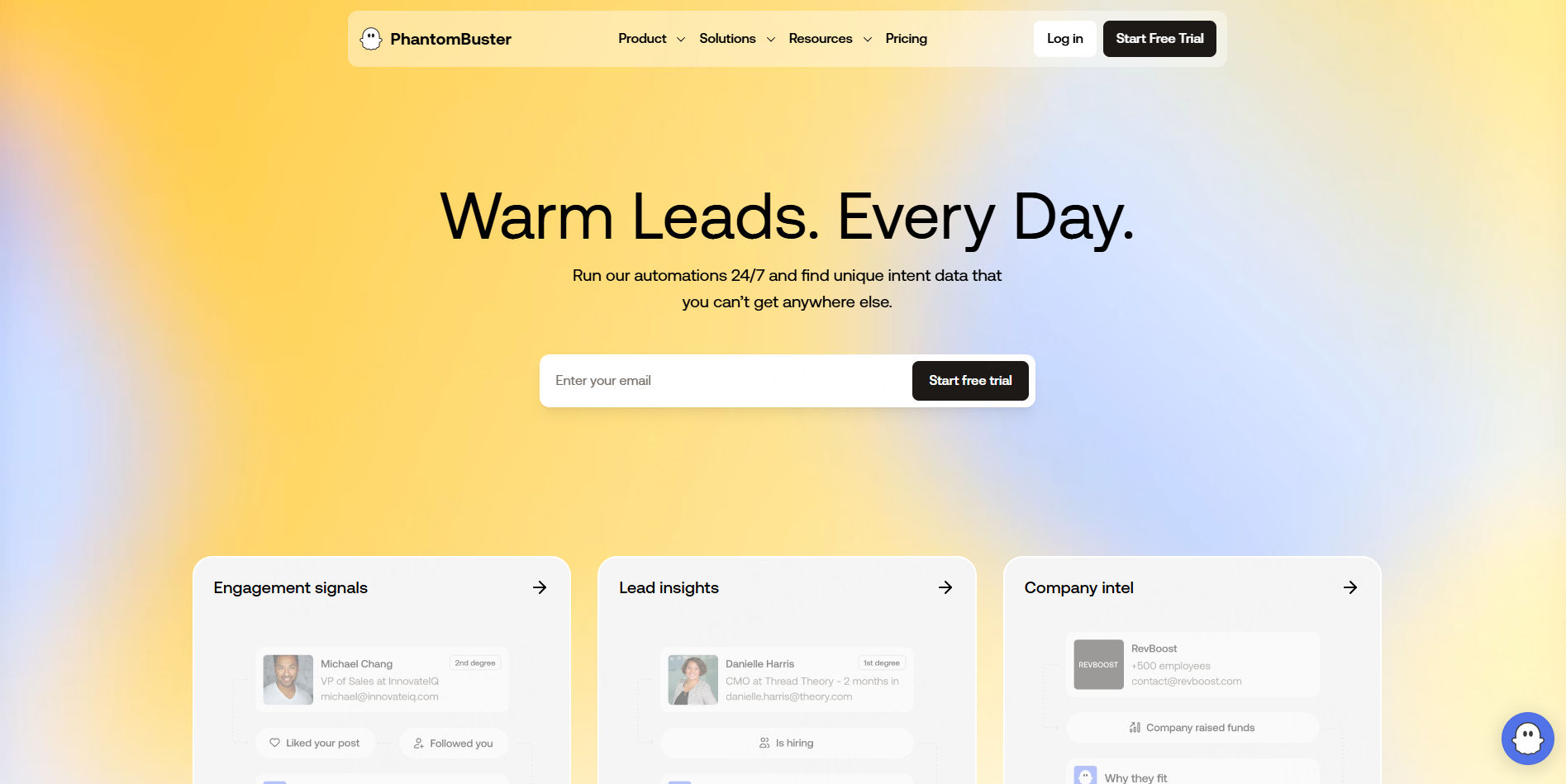
PhantomBuster provides Facebook automations called Phantoms. Its Facebook Profile Scraper accepts profile URLs and can collect publicly displayed names, locations, employment information, phone numbers, emails, websites, and related fields. It can also be combined with its Facebook Group Members Export workflow.
Best for: Growth teams that want to chain Facebook discovery, profile extraction, enrichment, and other automations.
A limitation is that the Facebook Profile Scraper requires a Facebook session cookie, and PhantomBuster recommends conservative processing rates.
3. SocLeads
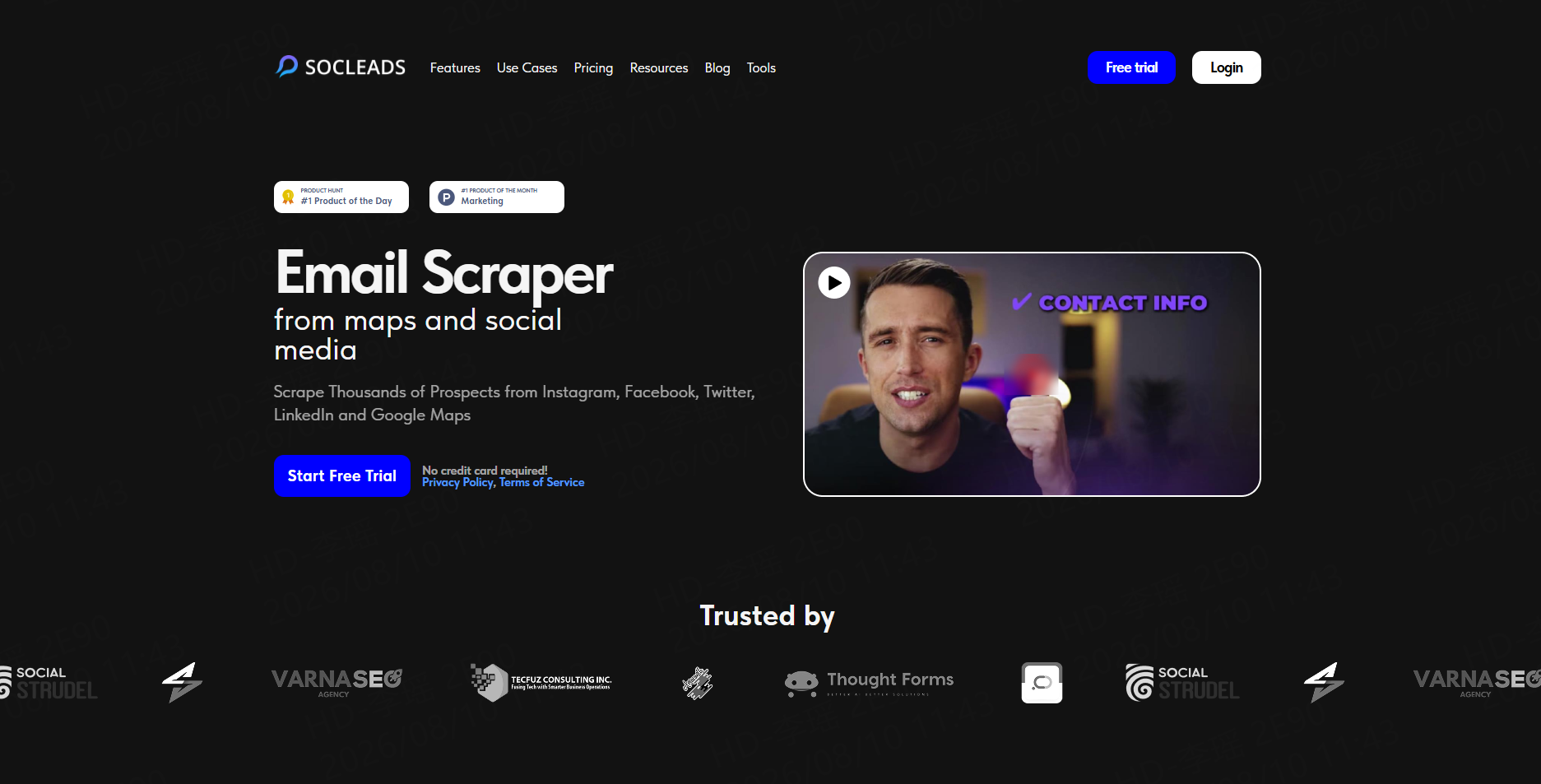
SocLeads focuses specifically on extracting contact information for prospecting. Its Facebook scraper is designed around finding emails from publicly accessible Facebook profiles, posts, and comments using keyword-based searches. Paid options also include email verification.
Best for: Sales teams whose primary output is an email prospect list.
The tradeoff is narrower data depth. SocLeads is more focused on finding contacts than building richer Facebook research datasets.
4. IGLeads
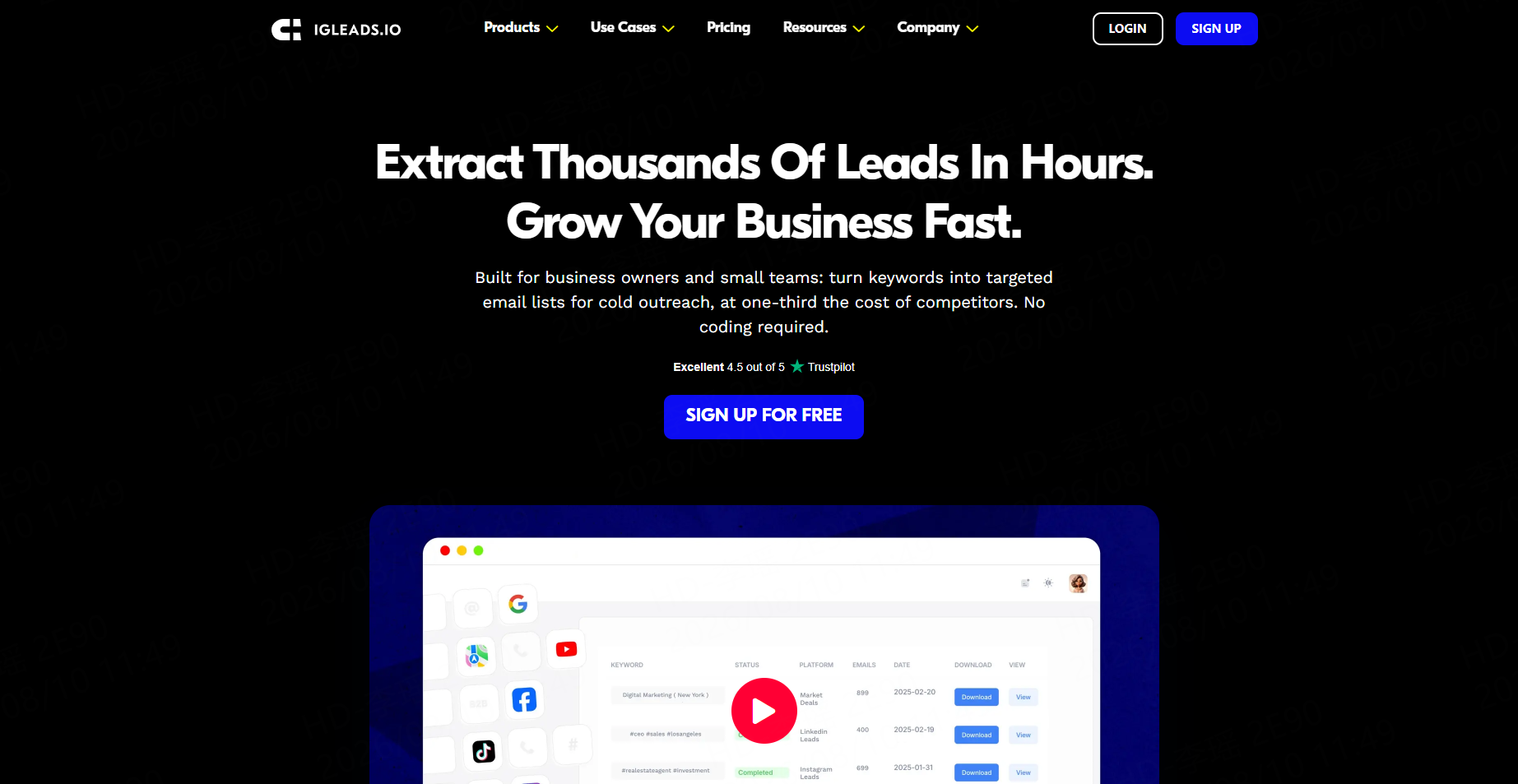
IGLeads positions its Facebook scraper specifically for B2B and B2C lead generation. Users can target Facebook data using keywords or interests, with workflows covering public information associated with groups, Pages, posts, and profiles.
Best for: Agencies and growth marketers that want simple social-media-based email prospecting without coding.
IGLeads is particularly relevant when Facebook is only one source in a broader social prospecting strategy, since the platform also supports other social channels.
5. Apify
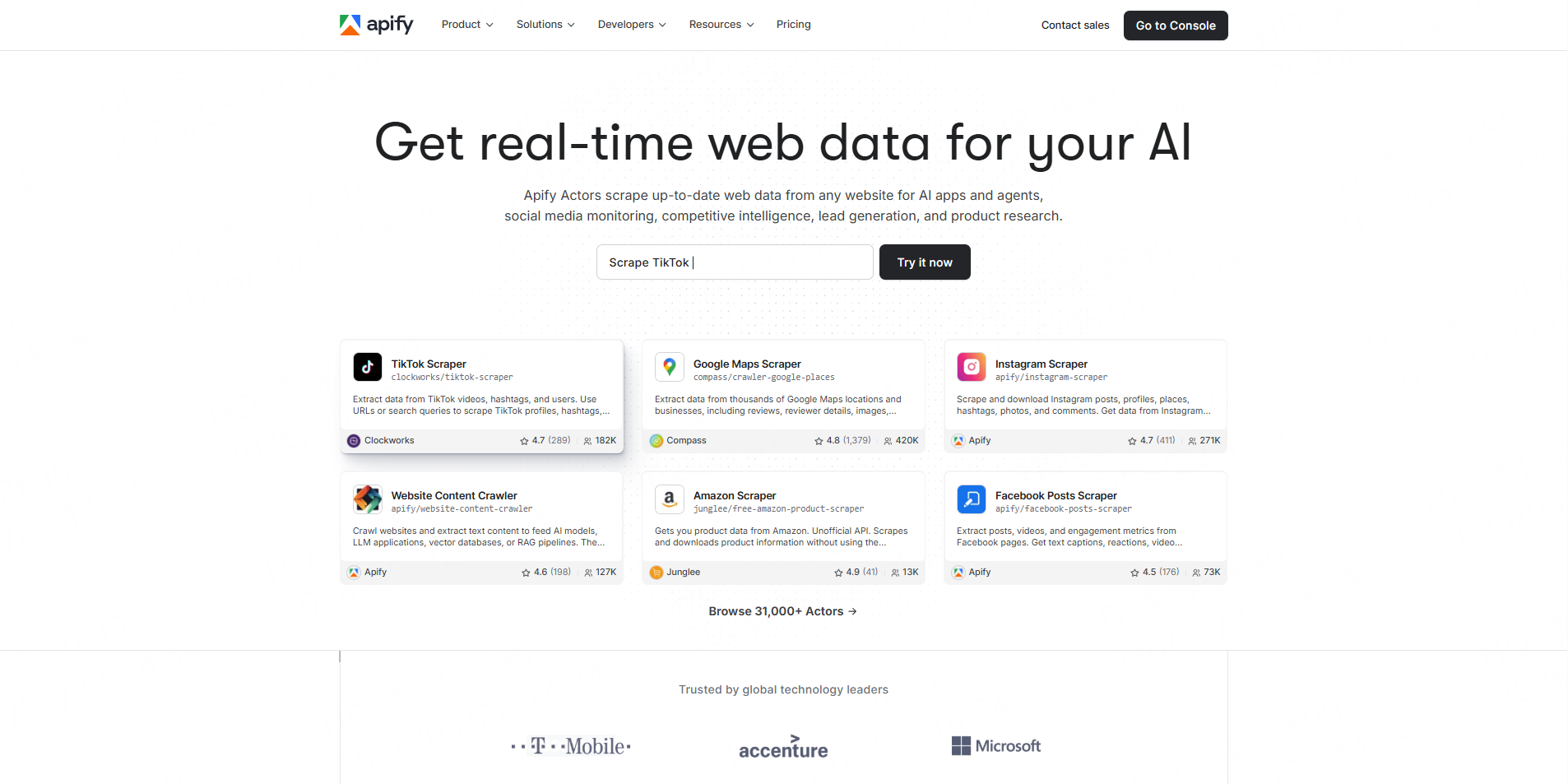
Apify’s maintained Facebook Pages Scraper extracts Page and profile data including websites, phone numbers, addresses, Messenger links, categories, ratings, follower counts, and other public business fields. Results can be exported to JSON, CSV, Excel, or HTML and connected through APIs and integrations.
Best for: Developers and RevOps teams building recurring Facebook data pipelines.
Apify provides more flexibility than a fixed lead-generation product, but teams may need to configure Actors, select the right Facebook scraper, and manage more of the downstream qualification logic themselves.
How to Turn Facebook Data Into Qualified Leads
Start with a clear ideal customer profile rather than collecting every available Facebook record.
For example, an agency might identify public Facebook Pages in a target niche, keep the website, category, location, and contact fields, then use post activity or engagement data as qualification signals.
With CoreClaw, the collected results can be cleaned and filtered before export so teams work with a more organized prospect dataset instead of raw page content. CSV or Excel works well for manual sales research, while JSON and API access are better for automated CRM or enrichment workflows.
A prospect record should then be verified before outreach. Public emails can be outdated or unrelated to the correct buyer, so important contact fields should be checked rather than treated as automatically sales-ready.
Which Facebook Lead Scraper Should You Choose?
Choose SocLeads or IGLeads when email extraction is the main objective. Choose PhantomBuster when Facebook scraping needs to become part of a multi-step growth automation. Choose Apify when developers want maximum workflow control.
For teams that want to combine Facebook profiles, Pages, posts, comments, and other public signals into structured lead research without coding, CoreClaw provides the more direct workflow. Developers can also build their own CoreClaw Worker when a ready-made Worker does not cover a specialized lead source.
Responsible Facebook Lead Generation
Lead generation should focus on relevant public business information and avoid collecting unnecessary private or sensitive personal data.
Meta defines scraping as automated data collection and states that unauthorized methods of accessing or collecting information can violate its terms. Teams should review current platform requirements, applicable privacy and marketing laws, and their intended use before running a campaign.
Conclusion
Facebook lead generation works best when scraping is treated as the beginning of a qualification workflow rather than a shortcut to massive contact lists.
With CoreClaw, teams can use ready-made Workers to collect public Facebook data, clean and filter structured results, export them for spreadsheet or CRM workflows, or automate recurring collection through an API. Pay-only-for-successful-results pricing and support for custom or developer-published Workers provide additional flexibility as prospecting workflows become more specialized.
Frequently Asked Questions

Content Writer @CoreClaw · Last Updated 2026-08-10
Lena Kovalenko researches how modern software systems expose and organize information online. Her writing focuses on the interaction between APIs, web platforms, and automated data workflows. When exploring a topic she typically compares multiple tools to understand their design assumptions. These comparisons often lead to articles that help readers see how different technical approaches influence reliability and efficiency.
查看作者资料 →免责声明:CoreClaw 博客上的所有信息均按“原样”提供,仅供参考。对于因您使用 CoreClaw 博客上发布的信息(或通过链接跳转至的任何第三方网站上的信息)而产生的任何后果,CoreClaw 不作任何陈述,亦不承担任何责任。在进行任何数据抓取活动之前,请务必咨询法律顾问,查阅目标网站的服务条款,并在必要时获取许可。