B2B lead generation is the process of finding companies that may need your product or service, collecting useful business information, and moving qualified prospects into a sales workflow. In the past, this often required manual research, spreadsheets, expensive databases, or developer-built scraping scripts.
No-code tools make this process easier for non-technical teams. Instead of writing code, teams can use ready-made tools to collect public business data, clean and filter lead lists, export results, and connect them with CRM or outreach platforms. The goal is not just to get more contacts. The goal is to build a repeatable workflow that produces better-fit leads.
What No-Code B2B Lead Generation Means
No-code B2B lead generation means using tools that do not require programming skills to find, organize, and act on prospect data.
A no-code workflow may include lead capture forms, Google Maps business data collection, email finders, CRM imports, automation tools, and outreach platforms. For example, a local SEO agency may search for dentists in Austin, collect business names, websites, ratings, phone numbers, available emails, and review counts, then filter the list before starting outreach.
CoreClaw fits into this workflow as the public business data collection layer. Its ready-made Workers let teams collect structured web data without building scrapers from scratch. The platform supports no-code usage, CSV, Excel, JSON, and API export.
Why Manual Lead Generation Breaks Down
Manual lead generation works when the list is small. It breaks down when a team needs hundreds or thousands of leads across different cities, industries, or data sources.
The common problems are simple. First, manual copying is slow. Second, spreadsheet data becomes inconsistent. Third, business contact data is often incomplete. Fourth, sales teams waste time on poor-fit prospects because the list was not filtered before outreach.
A strong B2B lead list should include more than a company name. Useful fields may include website, phone number, email, address, city, category, rating, review count, business status, source URL, and notes about why the company may be a good fit. This makes the lead list easier to prioritize and easier to personalize.
A Practical No-Code Workflow for Generating B2B Leads
Step 1: Define the Ideal Customer Profile
Start with a clear target. A vague search like “small businesses” will create a messy list. A specific target such as “dental clinics in Dallas with fewer than 50 reviews” is easier to collect, filter, and qualify.
Define these fields before choosing tools:
Question | Example |
What industry are you targeting? | Dentists, gyms, restaurants, real estate agencies |
Which location matters? | City, region, country, or service area |
What problem do they likely have? | Low reviews, no website, outdated listings |
What contact fields are needed? | Website, phone, email, LinkedIn, address |
What makes a lead high priority? | Rating, review count, category, contact availability |
Step 2: Collect Public Business Data
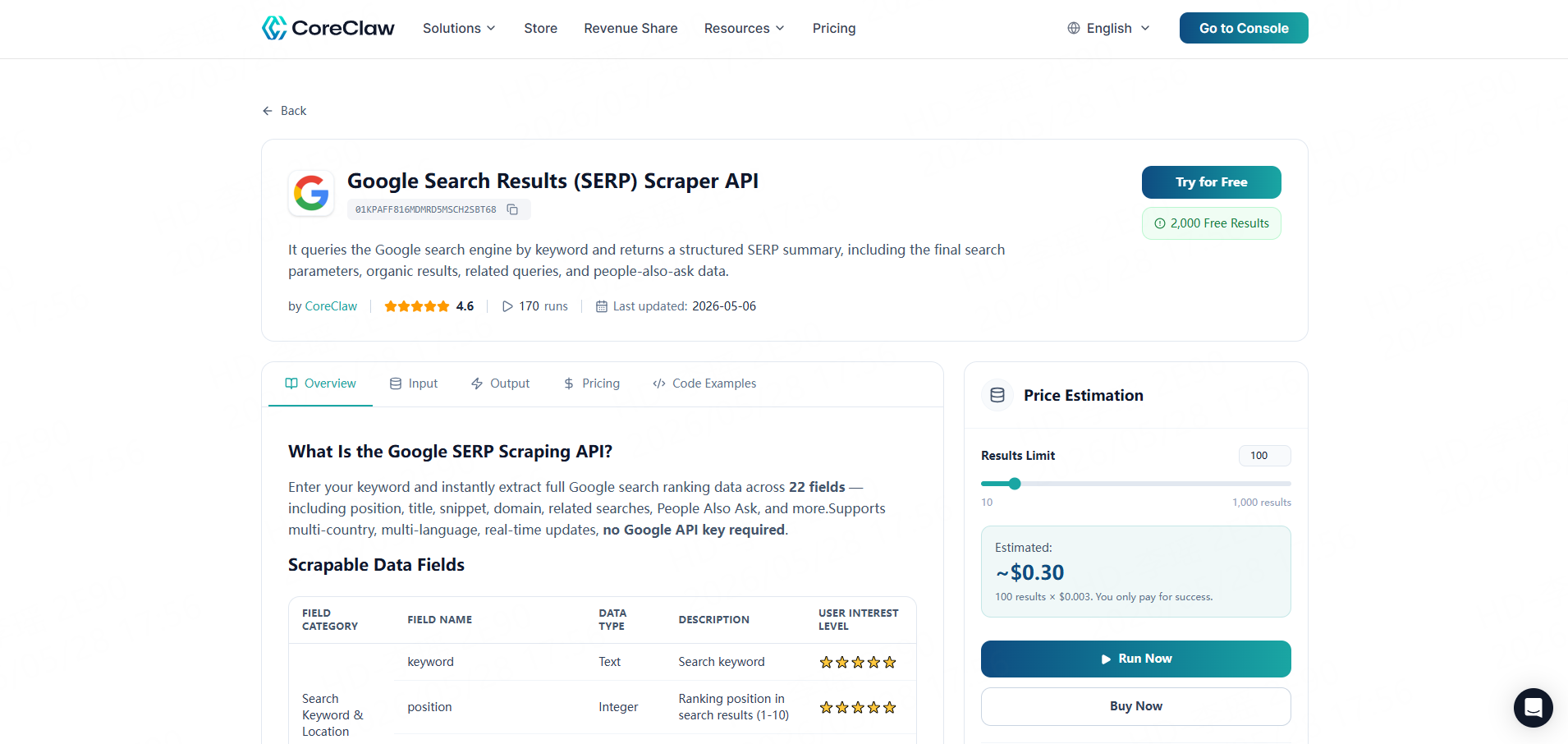
Once the target is clear, collect public business records from relevant sources. Google Maps is often a strong starting point for local B2B prospecting because it organizes businesses by category and location.
CoreClaw’s Google Maps B2B Leads Generation Scraper lets users enter keywords and target locations to extract public business details such as business names, phone numbers, websites, emails, ratings, reviews, social links, opening hours, categories, and addresses. The Worker is designed for no-code users and can export structured results for sales workflows.
For broader B2B research, teams can also use other sources such as Google Search, LinkedIn, directories, review platforms, ecommerce marketplaces, or social platforms. When a ready-made Worker does not exist, CoreClaw also supports custom Worker requests for more specific public data sources.
Step 3: Clean, Filter, and Prioritize Leads
Raw data is not enough. A lead list becomes useful when it is cleaned, filtered, and organized.
Common filters include:
Filter | Why It Matters |
City or region | Helps assign territories |
Business category | Keeps campaigns focused |
Website availability | Useful for web design or SEO outreach |
Rating and review count | Useful for reputation management offers |
Email or phone availability | Helps choose outreach channel |
Business status | Removes closed or irrelevant records |
CoreClaw is useful here because the workflow is focused on structured outputs, not raw page content. Cleaned and filtered structured data is easier to export, review, import into a CRM, and use for personalized outreach.
Step 4: Export Leads to Sales Tools
After filtering, export the data into the format your team needs.
Export Format | Best For |
CSV | Spreadsheet review and manual cleanup |
Excel | Sales operations and reporting |
JSON | Apps, scripts, and data workflows |
API | Recurring or automated workflows |
For non-technical teams, CSV or Excel is usually the easiest starting point. Developers and RevOps teams may prefer JSON or API access to connect lead data with internal systems, dashboards, or enrichment workflows.
Step 5: Run Responsible Outreach
Lead generation does not end when the list is exported. Outreach still needs to be relevant, compliant, and respectful.
In the United States, FTC CAN-SPAM guidance says commercial email should not use false or misleading header information, should not use deceptive subject lines, should identify the message appropriately, and should include a valid physical postal address. In the UK, ICO guidance explains that B2B marketing rules differ depending on recipient type, and businesses should provide a valid opt-out address and respect objections.
The practical rule is simple: collect public business data responsibly, avoid sensitive or restricted data, personalize your message, verify contacts, and make opt-out easy.
Example Workflow: Local Agency Lead Generation
Imagine a reputation management agency wants to find restaurants in Seattle with weak review profiles.
The team can start by defining the target: restaurants in Seattle with ratings below a certain threshold or low review volume. Then run CoreClaw’s Google Maps B2B Leads Generation Scraper using keywords such as “restaurant,” “cafe,” “bar,” and “bakery” for the target area.
The exported dataset may include business name, address, website, phone number, available email, category, rating, review count, and Google Maps URL. The team can filter out businesses that are closed, remove irrelevant categories, and prioritize businesses with low ratings or few reviews.
After that, the cleaned lead list can be exported to CSV or Excel, reviewed by the sales team, verified if email outreach is planned, and imported into a CRM. Outreach can then focus on a relevant message: helping local restaurants improve review visibility and customer trust.
This is more effective than buying a generic lead list because the leads are tied to a visible business signal.
Final Thoughts
Generating B2B leads without coding works best when it is treated as a data workflow, not a one-time search task.
CoreClaw helps teams make that workflow practical. With ready-made Workers such as the Google Maps B2B Leads Generation Scraper, CSV/JSON/Excel export, API access, pay-per-successful-result pricing, custom Worker options, and cleaned and filtered structured data, teams can move from manual prospecting to repeatable lead generation without building scraping infrastructure from scratch.
Frequently Asked Questions

Content Writer @CoreClaw · Last Updated 2026-06-02
Lena Kovalenko researches how modern software systems expose and organize information online. Her writing focuses on the interaction between APIs, web platforms, and automated data workflows. When exploring a topic she typically compares multiple tools to understand their design assumptions. These comparisons often lead to articles that help readers see how different technical approaches influence reliability and efficiency.
查看作者资料 →免责声明:CoreClaw 博客上的所有信息均按“原样”提供,仅供参考。对于因您使用 CoreClaw 博客上发布的信息(或通过链接跳转至的任何第三方网站上的信息)而产生的任何后果,CoreClaw 不作任何陈述,亦不承担任何责任。在进行任何数据抓取活动之前,请务必咨询法律顾问,查阅目标网站的服务条款,并在必要时获取许可。