An Amazon scraper is a tool that collects public product data from Amazon pages and turns it into a structured format. Instead of manually copying product titles, prices, reviews, ASINs, ratings, availability, and seller details, teams can use an Amazon scraper to build cleaner datasets for analysis.
For ecommerce teams, this data can support price monitoring, product research, competitor tracking, review analysis, marketplace intelligence, and inventory research. But the value is not in scraping pages alone. The real value is getting clean, filtered, and structured product data that can be exported, compared, and used in daily workflows.
What Is an Amazon Scraper?
An Amazon scraper collects publicly available data from Amazon search results, product pages, review pages, seller pages, or category pages.
Common Amazon data fields include product title, URL, price, original price, discount, rating, review count, ASIN, brand, seller, category, availability, ranking, product image, and shipping signals. For business use, these fields are more useful when they are delivered as CSV, Excel, JSON, or API results instead of raw HTML.
What Users Usually Want from an Amazon Scraper
Most users searching for “amazon scraper” are not looking for a technical definition. They usually want one of four outcomes.
First, they want product data for market research. This includes titles, ASINs, brands, prices, ratings, and category rankings.
Second, they want price monitoring. Pricing teams and sellers need to know when competitors change prices, discounts, or availability.
Third, they want review data. Reviews can show product complaints, feature requests, quality issues, and customer sentiment.
Fourth, they want clean exports. A scraper that returns messy data creates extra work. Structured fields such as product title, price, rating, URL, and review count are easier to analyze than raw page content.
8 Best Amazon Scraper Tools for Product Data
1. CoreClaw
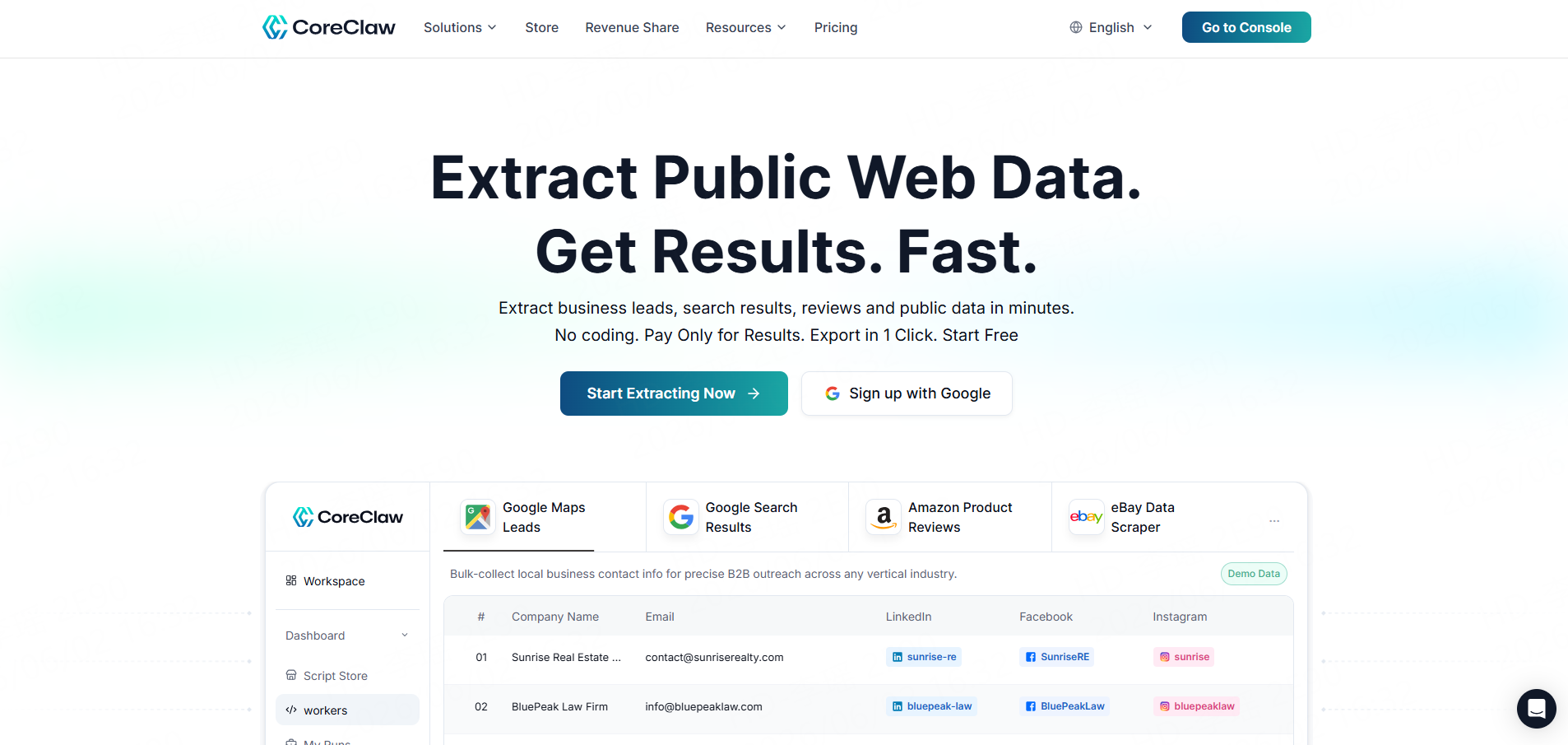
CoreClaw is a practical Amazon scraper option for teams that want product data without writing code. Its Amazon Product Scraper can extract public Amazon product data by keyword, including fields such as product title, brand, price, discount, currency, review count, ASIN, sales, ranking, and more.
CoreClaw is designed for users who need ready-to-use data, not just raw web pages. Teams can run ready-made Workers, clean and filter the results, then export data as CSV, Excel, JSON, or connect it through API workflows. CoreClaw also uses a pay-only-for-successful-results model, which helps teams focus spending on usable outputs.
Pros
- No coding required
- Ready-made Amazon Product Scraper
- CSV, Excel, JSON, and API export
- Cleaned and filtered structured data
- Pay only for successful results
- Free Trial 2,000 Results
- Good for ecommerce, market research, and pricing workflows
Cons
- Best when a matching Worker already exists
- Highly custom Amazon workflows may require a custom Worker
Best for: E-Commerce teams, Amazon sellers, researchers, pricing teams, and non-technical users who need clean Amazon product data quickly.
2. Bright Data
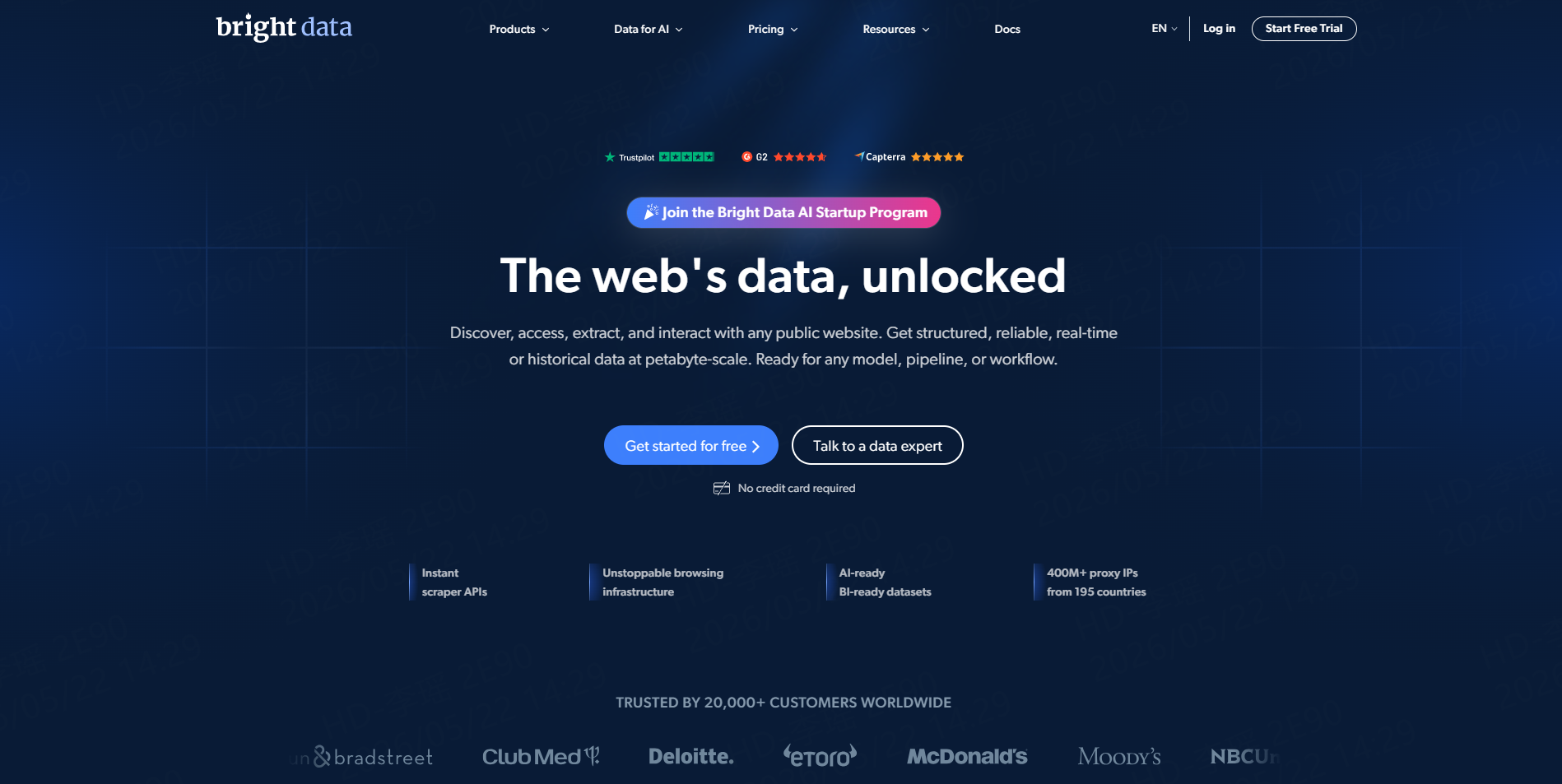
Bright Data is better suited for enterprise-scale Amazon data collection. It offers Amazon scraping options for product listings, reviews, sellers, prices, ASINs, and availability signals.
Pros
- Strong enterprise infrastructure
- Supports high-volume use cases
- Multiple Amazon-specific scraping options
Cons
- Can be more complex than smaller teams need
- Better suited for technical or enterprise users
Best for: Large teams with advanced scraping infrastructure requirements.
3. Oxylabs
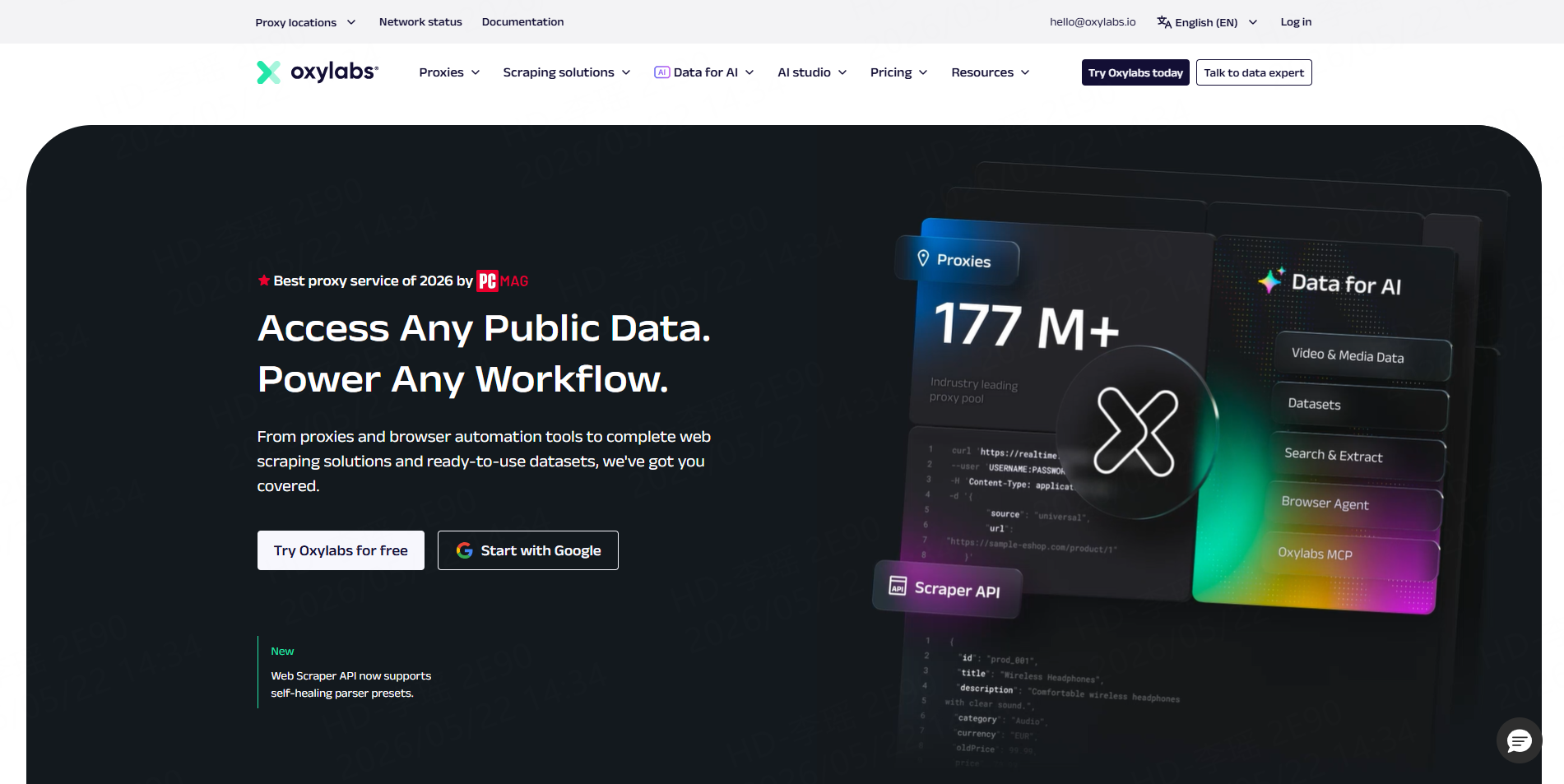
Oxylabs provides Amazon scraper API options for collecting structured Amazon data such as ASIN data, prices, product attributes, seller information, availability, Buy Box details, and best seller data.
Pros
- Strong API-first setup
- Suitable for recurring and large-scale workflows
- Good structured data capabilities
Cons
- More developer-oriented
- Business users may need technical support
Best for: Data teams and enterprises that need scalable Amazon scraping APIs.
4. Apify
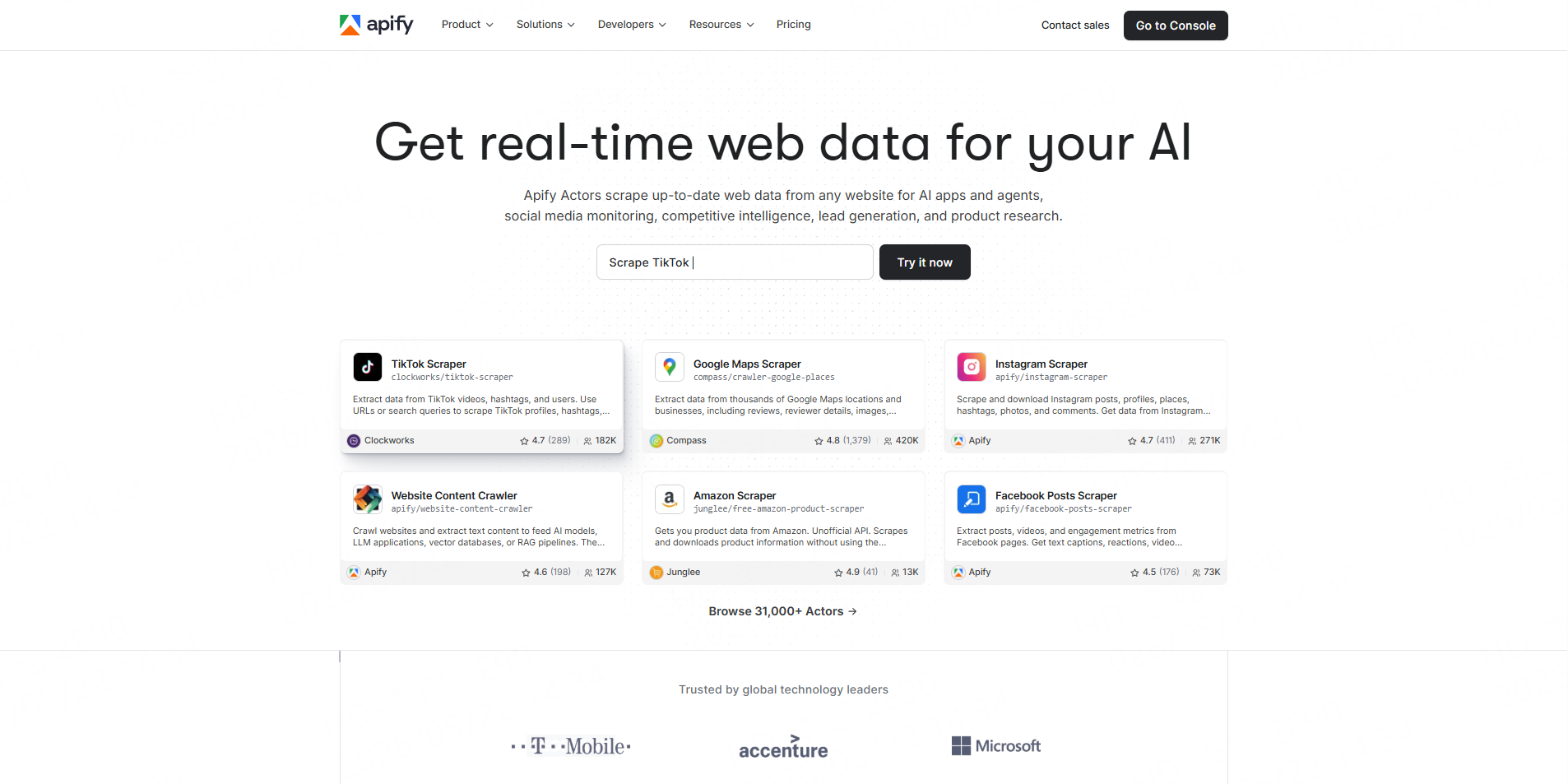
Apify offers a marketplace of scraping and automation tools. For Amazon scraping, users can choose existing Actors or build custom automation workflows.
Pros
- Flexible marketplace model
- Good for custom automation
- API and scheduling options
Cons
- Actor quality and setup complexity can vary
- Some workflows require technical knowledge
Best for: Technical users who want flexible Amazon scraping workflows.
5. ScraperAPI
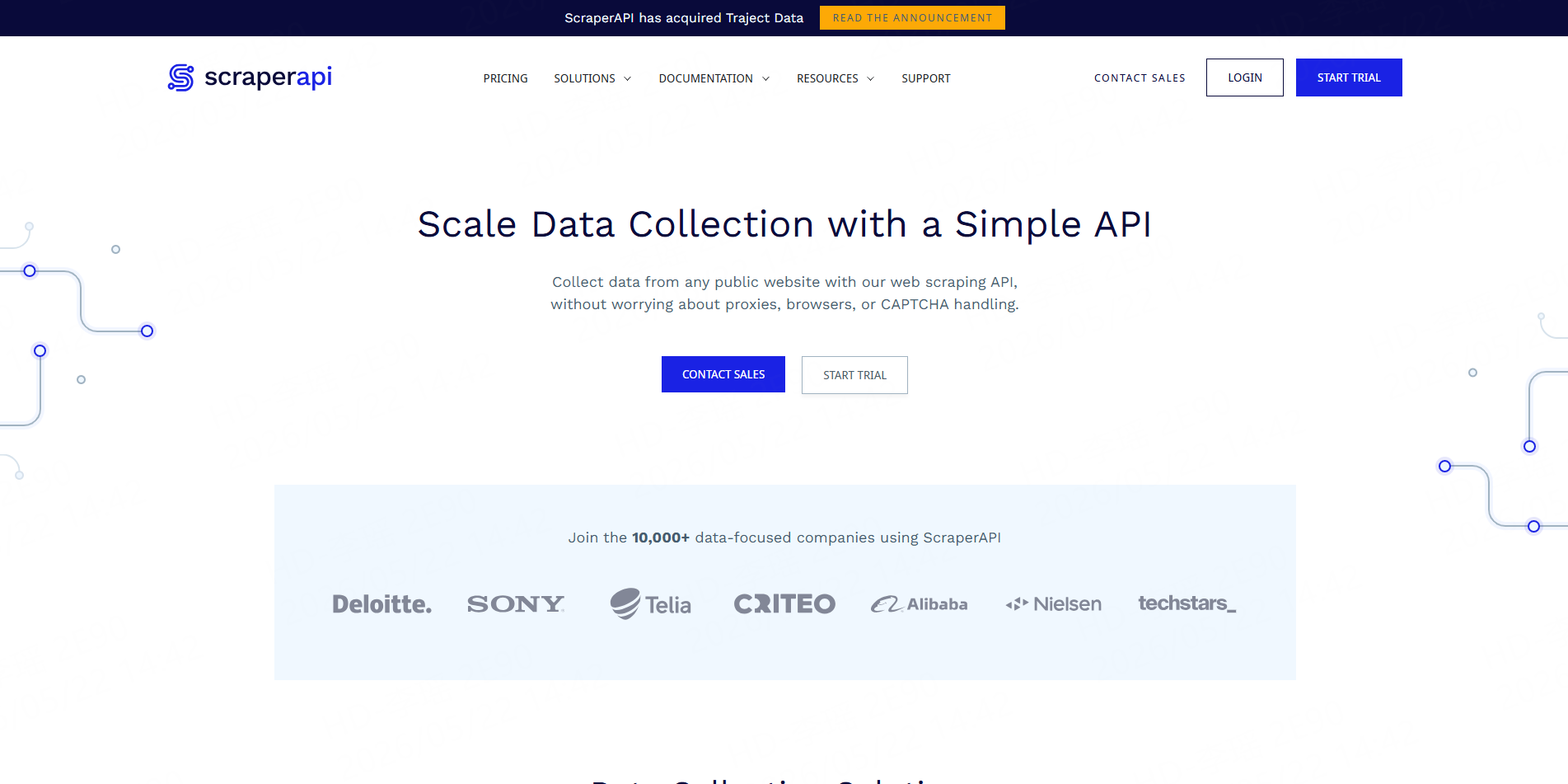
ScraperAPI provides API-based scraping infrastructure and Amazon-focused data collection options. It is useful for developers who want to request Amazon pages or product data through an API and process the output in their own systems.
Pros
- Simple API concept
- Useful for developer pipelines
- Can support large product collection workflows
Cons
- Requires data parsing and cleanup
- Less ideal for non-technical spreadsheet users
Best for: Developers who want an API-based Amazon scraping workflow.
6. ScrapingBee
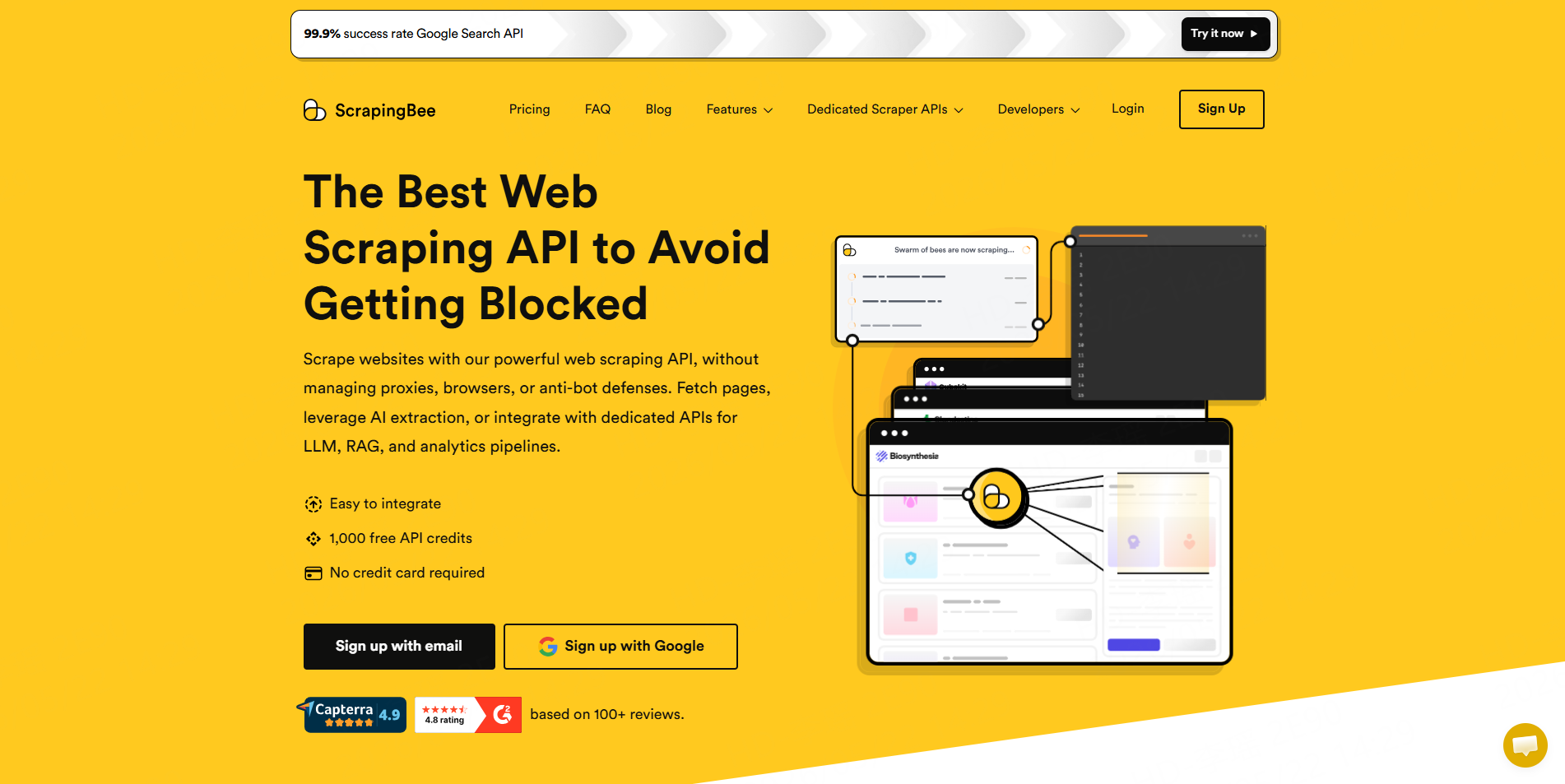
ScrapingBee is a developer-friendly scraping API that can help with page rendering, proxies, and browser-like requests. For Amazon-related workflows, developers may use it when they want more control over extraction and storage.
Pros
- Good for developers
- Useful for custom scraping scripts
- Handles common scraping infrastructure tasks
Cons
- Not focused only on Amazon
- Users still need to structure and clean the data
Best for: Developers building custom Amazon data pipelines.
7. Zyte
Zyte provides web scraping API and managed extraction options. It can be useful for teams that want a more technical or managed scraping setup.
Pros
- Full-stack scraping approach
- Useful for complex extraction needs
- Can reduce infrastructure maintenance
Cons
- More technical than no-code tools
- May be too much for simple product exports
Best for: Engineering teams that need managed extraction or custom scraping support.
8. Decodo
Decodo, formerly known as Smartproxy, offers an Amazon Scraper API under its broader eCommerce Scraping API product line. It is designed for collecting Amazon product data, prices, offers, reviews, and search result data through API requests.
Pros
- Amazon-specific scraper API
- Supports product, price, offer, review, and search result data
- HTML, JSON, and CSV output options
- Useful for developer-led ecommerce data pipelines
- Proxy and browser infrastructure included
Cons
- More technical than no-code Amazon scrapers
- Users may still need to clean, filter, and organize data after extraction
- Less suitable for teams that mainly want spreadsheet-ready workflows
Best for: Developers and ecommerce data teams that need API-based Amazon product, pricing, and review data collection.
Amazon Scraper Comparison Table
Tool | Best For | No-Code Friendly | API Available | Main Strength |
CoreClaw | Clean Amazon product data | Yes | Yes | Ready-made Worker and structured export |
Bright Data | Enterprise Amazon scraping | Partial | Yes | Large-scale infrastructure |
Oxylabs | Scalable Amazon API workflows | No | Yes | Structured API output |
Decodo | Amazon API scraping workflows | Partial | Yes | Amazon-specific API with proxy and browser support |
Apify | Custom scraping workflows | Partial | Yes | Marketplace and automation |
ScraperAPI | Developer pipelines | No | Yes | API-based page collection |
ScrapingBee | Custom developer scraping | No | Yes | Rendering and scraping infrastructure |
Zyte | Managed extraction | Partial | Yes | Full-stack scraping support |
What Amazon Product Data Should You Collect?
The best Amazon scraper setup starts with a clear goal. More data is not always better.
For price monitoring, collect product title, ASIN, URL, current price, original price, discount, currency, availability, and timestamp.
For product research, collect title, brand, category, rating, review count, ranking, image, ASIN, and product URL.
For review analysis, collect rating, review text, review date, product ID, verified purchase signals when public, and review count.
For seller analysis, collect seller name, offer price, fulfillment signals, availability, and seller profile information when publicly available.
A clean dataset should also include timestamps because Amazon prices and availability can change quickly. A price without a collection time is less useful for reporting or trend analysis.
How to Choose the Right Amazon Scraper
Choose based on your team’s skill level, target data, and output needs.
A business user usually needs a no-code workflow, clean exports, and simple filtering. A developer may prefer an API that can connect to scripts, apps, dashboards, or databases. A large enterprise may need high-volume scraping infrastructure, advanced proxy handling, and recurring scheduled jobs.
Output quality matters most. Raw HTML is useful for developers, but most ecommerce teams need structured data. CSV and Excel are easier for spreadsheet analysis. JSON and API access are better for apps, dashboards, and automated pipelines.
A Practical Amazon Scraping Workflow with CoreClaw
A simple CoreClaw workflow starts with the Amazon Product Scraper. The user defines the keyword, product category, or target input, then runs thhttps://console.coreclaw.com/logine Worker to collect public Amazon product data.
After collection, the results can be cleaned and filtered before export. For example, a pricing team may keep only products with matching keywords, valid prices, review counts above a certain threshold, and available ASINs. A market research team may filter by category, brand, rating, or ranking.
The final data can be exported as CSV or Excel for business review, JSON for technical workflows, or connected through API access for recurring internal systems. For unsupported or niche requirements, teams can request a custom Worker instead of building a scraper from scratch.
Final Thoughts
The best Amazon scraper is not always the most technical tool. It is the tool that helps your team get the product data it actually needs in a clean, usable format.
With CoreClaw, teams can use a ready-made Amazon Product Scraper, collect cleaned and filtered public product data, export results as CSV, Excel, or JSON, connect through API workflows, pay only for successful results, and request custom Workers when needed. For teams that want Amazon product data without turning every project into an engineering task, CoreClaw offers a practical path from Amazon pages to ready-to-use datasets.
Frequently Asked Questions

Content Writer @CoreClaw · Last Updated 2026-06-03
Lena Kovalenko researches how modern software systems expose and organize information online. Her writing focuses on the interaction between APIs, web platforms, and automated data workflows. When exploring a topic she typically compares multiple tools to understand their design assumptions. These comparisons often lead to articles that help readers see how different technical approaches influence reliability and efficiency.
查看作者资料 →免责声明:CoreClaw 博客上的所有信息均按“原样”提供,仅供参考。对于因您使用 CoreClaw 博客上发布的信息(或通过链接跳转至的任何第三方网站上的信息)而产生的任何后果,CoreClaw 不作任何陈述,亦不承担任何责任。在进行任何数据抓取活动之前,请务必咨询法律顾问,查阅目标网站的服务条款,并在必要时获取许可。